The Perfect Curriculum

You are about to start a new school year and the planning of a new school adventure has already begun. One of biggest questions on your mind might be, “What would be the perfect curriculum?”. The truth is, there is no such thing as a perfect curriculum. In fact, I have found in my 12 years of homeschooling that I can use almost any type of curriculum and give my kids an amazing education. Perhaps this thought brings you relief or perhaps this thought brings on more fear because now what in the world do you choose to use?

The most important thing to remember is that you want your curriculum to serve you. You do not want be a slave to your curriculum. It is a tool that it to benefit your teaching not dictate it. I learned this lesson the hard way in my earlier years of homeschooling. I am a lover of the check list. I want to make sure that I check off all the boxes on my list, so that I can feel accomplished at the end of the day. In fact, if I have done a task that is not on my check list, I will put it on my check list just so that I can check it off.

Although I can appreciate my gift of being administrative, this love of check lists can have some negative effects. This became evident in my homeschooling when I was more interested in checking off the boxes instead of taking the time to cultivate a love of learning in my kids. I ended up being a slave to my curriculum because I had a desire to see all those boxes checked. Surprisingly, this did not end up being beneficial to the homeschooling of my children. I realized I needed to think about what my actual goals were and which curriculum would best serve the purpose of reaching those goals.

One of my biggest goals is to develop a love of learning so that when they have graduated from my homeschool they will still desire to pursue learning in whatever God had for them. I came to the realization that I didn’t need a certain curriculum to accomplish this feat. I needed to quit worrying about whether the boxes were checked or whether the curriculum was perfect and just work on cultivating a delight for learning. How does our family do this?

We read great books, we study the arts and music, we talk about how math isn’t just about formulas but is evident in the very universe we live in, we explore the kids interest and see where it takes them. Throughout my years of homeschooling, the search for the perfect curriculum became obsolete and my pursuit of creating life long learners was a more prominent goal in my mind.

Now you might be thinking these are all great ideas, but I have no idea what curriculum to choose! I am going to list a few of my favorites to give you place to start. Another thing to keep in mind is the lifestyle that your family is living and the environment that your homeschool will be in. If both parents are working and homeschooling, then you want to look for a curriculum that lays each day out for you because you don’t have necessarily the time to create your own. Even with the laid out curriculums, feel free to cut out things that your kids don’t need or you don’t want. Remember that it is a tool for you to use. If you want more of a literature based curriculum, then you want to look for curriculums that are heavy with good books. Our family uses “The Charlotte Mason” Method and the curriculum is free online at amblesideonline.com. If you are interested in “The Charlotte Mason” Method, I would encourage you to research it before you start. It’s a wonderful way to homeschool children, but if you don’t understand the method then the curriculum won’t make sense. I will list some of my favorite curriculum by subject.

Ready Made Curriculums:

(These are also very literature based. In other words, lots of books)

Sonlight

Amblesideonline.com

My Father’s World

Science:

Apologia.com

Spangler Science (Science kits with ready made experiments)

English/Reading:

Houseofhumaneletters.com (Excellent Reading and Lit classes for Junior High and High School)

Veritas Press (This website has excellent options for littles that need hands on learning for learning to read)

All About Reading

All About Spelling

Math:

BJU Math

Saxon Math

Teaching Textbooks ( This was more visual for my child with dyslexia)

Music/Art/Shakespeare:

SimpleCharlotteMason.com (They have excellent resources for the arts/music and Shakespeare)

If you are looking for more wisdom and insight into the world of homeschooling, I highly recommend the online 2020 Back to School Conference found at cindyrollins.net

Books that Every Homeschooler Should Read:

Teaching from Rest by Sarah Mackenzie

The Read Aloud Family by Sarah Mackenzie

Morning Time by Cindy Rollins

Picking curriculum and planning a school year can feel quite daunting, so feel free to message me any questions that you might have. Every homeschool family is different and each of our journey’s are unique, so I am in no way saying that all the favorites that I have listed are the only options. It is not an exhaustive list and it might not be what you need but its a place to start. There are many options out there, ready to serve your unique homeschool needs. Homeschooling is an adventure and one of the best decisions I made for my kids education. Enjoy the journey!
3 Experiments That Will Get Kids Excited About Science!

I am a science geek at heart.  I love how many different things fall under the subject of science.  There are so many different things you can study and learn about when it comes to science. Even when I was young, I wanted to find out how things worked or the science behind different things in the world. One of the best parts about science are the experiments!

Kids can learn a scientific concept but when they see that concept in action, they will have more understanding of how it works.  I also have had fun using science experiments in my object lessons when I teach children’s church.  I have a favorite site called madaboutJesus.net .  They have excellent science experiments for many different lessons in the Bible.  I have found out that its important especially if you are demonstrating the experiment, to try it out first on your own.  There are usually tweaks that need to happen to get the desired result.  All my kids love to do science experiments, but sometimes there are certain experiments that have a “wow” factor for the kids.  I like to randomly do some of these experiments just to get the kids excited about science or to start a discussion on why the experiment did what it did.  Here are 3 experiments that have been exciting to my kids….

  1. Elephant Toothpaste

th

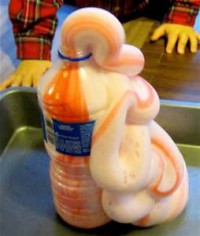
Elephant Toothpaste is an all time favorite with my kids.  It has quite a chemical reaction that is fun to watch.

Materials:  –16oz or 24oz empty plastic bottle, hydrogen peroxide 6% (you can find this at your local beauty supply store), dish soap, yeast, warm water, food coloring (optional)

Elephant Toothpaste is a common scientific experiment where oxygen gas produces the release of oxygen in a form that we can visualize. The final product (visualization after mixing the ingredients together) appears as a thick foam that looks like a toothpaste. This is a messy experiment that you would want to do outside or we bought one of those tin foil baking dishes that caught all the foam.

How to make Elephant Toothpaste:

Take the package of yeast and mix it with half a cup of warm water.  Let this sit for 10 minutes.  If you don’t let the yeast sit, the experiment will have less of a reaction.  Meanwhile set the empty plastic bottle in a wide short glass to stabilize it.  I have found this to be helpful in not having the bottle tip over when you get the chemical reaction.  Put on a pair of plastic gloves and fill the bottle up with 8oz of hydrogen peroxide.  If you are using 6% or more for the hydrogen peroxide, you will want to wear gloves because the peroxide can burn your skin and turn it black.  I don’t let kids do this part, I do the pouring and wear the gloves just to be safe.  Next put a couple of tablespoons of dish soap in to the bottle and carefully mix the two ingeridents.  Now pour the yeast in and watch the elephant toothpaste emerge from the bottle.  Its quite a reaction.  You can add the food coloring right before the yeast if you want your toothpaste to be a different color.

Tips/Tricks:

If you want a bigger chemical reaction you can buy a stronger hydrogen peroxide at most beauty supply stores.  We did 9% and 12% strength.  The 9% was about perfect for indoors but any higher percent and you would want to be outdoors.  If you do use the stronger hydrogen peroxide don’t forget the gloves!  You do not want your fingers turning black.  Another helpful hint is to use a funnel when pouring ingredients into the bottle.  If you use just 3% hydrogen peroxide, you will still get a reaction just not as impressive.  Check out Elephant Toothpaste experiment demonstrated on youtube to give you a better visual of what its supposed to look like.

2.  Crushed Can Experiment

images

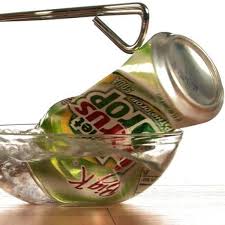
This experiment has an immediate reaction of letting the pressure of air crush a can.  Air pressure is all around us but we don’t really notice it most of the time.  This experiment demonstrates how powerful air pressure can be.

Materials:

Empty soda can, stove top or hot plate, Cooking tongs, gloves, Bowl, cold water

Directions:

Put some really cold water in a medium or large bowl (I used a mixing bowl).  Then put about a tablespoon of water in the bottom of the empty soda can just to cover the bottom of the can.  Put the can on the stove (you can use a frying pan underneath if you don’t have a hot plate) and then turn on the stove.  Wait until the water is boiling in the can.  You will hear it boiling and see the water vapor rising.  Wait about 1 more minute, then grab the tongs.  Use the tongs to pick up the can and plunge it upside down in the cold water.  The can will immediately implode. Steve Spangler Science does a great job of explaining the science behind the crushed can on their website.

3. Walking on Eggs

th-5

You can walk on eggs without them breaking.  This has a “wow” factor because the kids don’t think that you can.  The first thing you do is try to walk on one egg and it will crush right away, but you can walk on eggs if they are all together in a dozen in the carton.  I ripped off the lid of the egg carton and staggered 6 dozen eggs.  A key to getting it to work the best is to go bare foot and to make sure your weight is even.  You can also show your kids when you squeeze an egg sideways as hard as you want, it will not break.  The egg is unique in how God made it because its one of most delicate foods, but also one of the strongest. The egg will break by itself but when you put it with the dozen, you can walk on them and not have any break.  This is also a great Sunday School lesson on unity and working together. You can find many examples and tips on how to walk on eggs on youtube.

Hope you have fun trying these experiments.  There are many more science experiments that are fun for kids to do that have become favorites in my family.  I hope to share more science experiments in the future that you might have fun trying.

What are some favorite science experiments in your homeschool?

10 Favorite Picture Books That Will Delight Any Age

The start of school and beginning of fall always reminds me of warm cups of tea,  yummy scones and good books.  We had our monthly library trip where we filled up on a bunch of books for September.  My kids asked me if we could just have a reading day for homeschooling that day and I thought that it was an excellent idea.  Soon my children had taken all the cushions from my couch, a bunch of blankets, some favorite stuffed animals and they informed me that they had created a “book house” where they were all  sprawled out reading their books.  It was a delightful site to see.  Even my 3yr. old had his books out because he wanted to be part of the “reading” day.  I love the flexibility of homeschooling that allows me to say “Yes” to a reading day.

One of my favorite genres is children’s picture books.  I must confess I had a library of children’s literature before I ever had kids.  When I graduated from college, the gifts that everyone brought me were different children picture books.  I especially like the picture books that have sense of humor added to the story.  There are numerous picture books out there that are quite enjoyable and entertaining for any age.  I like adding them randomly to our homeschool when I find one I especially like.  Here are a few of my favorites….

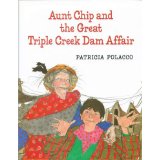
1.Aunt Chip and the Triple Creek Dam Affair by Patricia Polacco

51DInAjuGyL._AA160_

This is a delightful book that celebrates books.  I discovered Patricia Polacco in my college days when I was studying elementary education.  I think she is a delightful author and many of her books are enjoyable.  I loved this one because it celebrated reading and books.  Its actually a good one for the start of the school year.

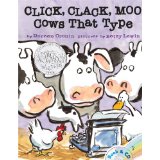
2. Click, Clack, Moo Cows That Type by Doreen Cronin

61-lB2nVCZL._AA160_

This is one of favorites because of the sense of humor that the author brings to the story.  Its all about animals that are negotiating with the farmer for different things that they want using a type writer.  The expressions and things that they type are hilarious. This is a book that gets taken out of the shelf quite often by my children.  Doreen Cronin has written other wonderful books that are also worth checking out.

3. Peanut by Linus Alsenas

51B1axQk9cL._AA160_

Peanut is a book that is about an elderly lady who wants a pet puppy and she ends up with a pet elephant.  The sense of humor comes in when she thinks, through out the story, that the elephant is a puppy.  My kids think this book is hilarious.

4.  The Wolf’s Chicken Stew by Kieko Kasza

51zhrKwQtfL._UY250_

Kieko Kasza is another of my favorite authors.  She tells a delightful story and brings humor into her stories that make us read them over and over again.  Wolf’s chicken stew is about a wolf that wants to eat this chicken and all the ways that he tries to fatten the chicken up for his dinner but in the end it has a surprise ending where the wolf actually becomes part of the chicken’s family.

5.  The Mitten by Jan Brett

51iYZCZ7HHL._AA160_

The mitten is a story about an small animal that finds a mitten to keep warm and hides in it.  Then as the story continues, all these different animals also want to hide and get warm in the mitten at the same time.  Jan Brett is an amazing author that has written several of my favorites.  The illustrations are great too.

6.  If you give a Pig a Pancake by Laura Numeroff

614bIpjA0xL._AA160_

If you give a Pig a Pancake is probably many kids favorites.  Its a story that explores the question what would happen if you gave a pig a pancake and the results of that choice.  She has written many others in the series. Some of my other favorites are “If you give a Mouse a Cookie” and “If you give a Moose a Muffin”

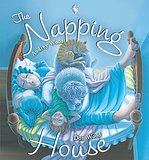
7.  The Napping House by Audrey Wood

61i7+J1E3sL._AC_UL160_SR149,160_

I love the rhythm of the language in the “The Napping House”.  The kids start learning really fast what the story is going to say and they start reading it along with you.  The illustrations are hilarious and it definitely has a place reserved on our library shelf as one of our favorites.

8.  Once upon a time, the End (asleep in 60 seconds) by Geoffrey Kloske and Barry Blitt

61HVVPKAVDL._AA160_

This book makes me laugh.  Its a humorous book that shortens all these bedtime stories to the length of 60 seconds.  The way they shorten the bedtime stories is where you find the sense of humor in the book.  So my kids were not satisfied with the short length of the stories, but it was still fun to read and laugh at how they shortened the stories.

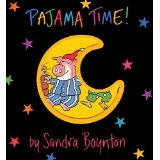
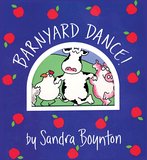
9.  Barnyard Dance and Pajama Time by Sandra Boyton

51O2kWAx5bL._AA160_515f7oTa6jL._AC_UL160_SR147,160_

Honestly I probably own every Sandra Boyton book that she has written.  They’re my favorite board books for kids.  You can tell that they are well loved at our house because we occasionally have to get a new copy because of the wear and tear on the original one we bought.  Sandra Boyton does an excellent job of bringing a sense of humor to kid board books.  My kids memorize the Sandra Boyton books quickly.  Great gift idea for new or young mommies.  Although I do see my older kids pulling them out of the shelves too.

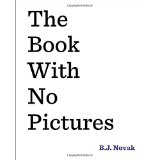
10.  The Book with No Pictures by B.J. Novak

4148uGcgdEL._AA160_

This is a new picture book that I just bought for my collection and I am so glad I did.  It is now added to my favorites list.  The author decided to write a book with no pictures that kids will love.  In the book there are all sorts of silly sayings and the author points out that he can make the reader say anything he wants.  Its written in a delightful and humorous way.  Even my older kids were laughing.  The author is quite creative in how they chose to write this book. I hope there are more books like this from the author.

Homeschool Unit Study Idea:

One of the ways that I have used children’s books in my homeschooling is to have an author of the month.  I pick one of my favorite authors like Jan Brett or Dr. Suess and I create a unit study.  I gather books from the author we are studying and I also try and find a biography on the author.  You can do the unit study as simple as you want or dig deeper.  For a simple unit study you could just read the different books and read the biography of the author.  If you wanted to dig deeper, you could have activities that go along with each book or you could have your older kids write papers on the life of the author.  You could also have your kids write book reports or reviews on what they thought about each book the author wrote.  They are a ton of different things you could do for the author of the month idea.

Hope you enjoy some of my favorite picture books.  There are many more that I could have blogged about and I am sure you might have different favorites that would go on your list.  What are your favorite picture books for kids?

Lifeskills

One of my goals in homeschooling is to not only educate my children in academics but also in Lifeskills.  “Lifeskills for Kids” by Christine M. Field is a great tool to use.  This is a excellent resource for parents that goes over the basic skills of life that we need to know as adults.  I find these kind of books helpful in making me think about the everyday stuff I do that my kids may not know how to do, like balance a checkbook or the process of learning how to do laundry.  Some of the topics that were interesting to me were the chapters on teaching kids about decision making and teaching them about organization of their space.  Its a worth checking out.

51jOsrGocYL._SX322_BO1,204,203,200_

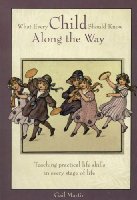
Another resource that I think is worthy of checking out is the book called, “What every Child Should know Along the Way” by Gail Martin.  This is another book that teaches about Lifeskills for children.  What I love about this book is the different lists that the author provides of the different life skills that a child should know at each age of their life starting at the age of 2.  This book is written from a biblical perspective, so there are also many references to God’s word and what it says about life skills.  I also enjoyed the helpful and creative ideas on how to train the little ones.

193274018X.01._SY200_SCLZZZZZZZ_

Teaching life skills to kids can be a lot of fun.  For example, I want my kids to know the basics of cooking before they leave our home.  The easiest way for me to do this with five kids is to have a cooking assistant for meal times.  So each week a different child is assigned to help me with meals and I let them learn how to prepare meals with me. Depending on what we are doing, they can learn anything from how to make tuna fish sandwiches to baking bread from scratch.  You can also involve kids in meals by having them plan and shop for a meal and then having them help cook it.  Its fun to see what they come up with.

Taking the Boredom out of Math

I have children who are not too keen on doing Math.  I found Life of Fred to be an enjoyable and refreshing alternative for my kids to do Math in a unique way.  Life of Fred Math curriculum is in a book format that follows the life of a character named Fred.  The books are filled with humorous nonsensical stories of Fred’s life.  Throughout the entire story the author weaves in math concepts for the kids to learn.  At the end of each chapter, there is an opportunity for kids to answer math questions and test their knowledge of the concepts that were taught in the story.  “Life of Fred” curriculum is not very repetitive, so it may not be enough practice for a student that needs a lot of repetition.  I use it along side my normal math as a fun supplement.  My kids are eager to finish “normal” math so they can do Life of Fred.  “Life of Fred” curriculum has books for all grades.  It starts at Kindergarten age and goes all the way through post high school math.  I know some parents use “Life of Fred” curriculum alone as their only math.  This would be fine for a student who doesn’t need a lot of practice or for a student who gets overwhelmed and needs math in small amounts.  You could always find worksheets to reinforce practicing the concepts that they had a harder time with.  “Life of Fred” books sell for around $17 dollars per book.  Another thought is the books are not written as easy readers.  So, if you were starting with a Kindergartener, then you would read the book to the child and do the math with them. I started the first book with my first grader this year and I still read the book  to him and then he does the math at the end of each chapter.  As a family we have enjoyed following Fred on his adventures through Math.  “Life of Fred” curriculum has helped make math enjoyable and fun especially for my kids who drag their feet at the mention of Math.  You can find “Life of Fred” books at lifeoffredmath.com

Math for the Visual Learner

I have blogged before about my son who has APD (Auditory Processing Disorder).  If you have APD, it is quite difficult to learn things in an auditory way.  My son is amazing at Math but he was not understanding the material when I would use a normal “workbook” math curriculum.  I needed to find a Math Curriculum that was mostly visual for him to understand the concepts.

Teaching Textbooks was a great answer for what we were looking for.  Its a Math curriculum that is done on the computer.  My son went from getting almost every problem wrong to getting almost every problem correct.  Teaching Textbooks is a visual curriculum that will appeal to visual learners like my son.  The only thing that I caution parents on, is that Teaching Textbooks moves slower than a lot of other curriculum.  So, you would want to cover more material in the upper grades to match some of the other math curriculum out there.  The curriculum can be very repetitive which works amazing for someone with APD but might not go fast enough for other kids.  My older son who loves “workbook” type curriculum would be driven nuts by Teaching Textbooks because of the pace that they set.  Each child is different and has different ways that they learn best.

Another resource for the visual learner is Mango Math.  Mango Math is a company that puts together crates for each grade of various Math Games that reinforce math concepts that are being taught.  They are on the more expensive side because they are designed for a classroom but homeschool families do use them.  Each crate has 20-25 math games depending on the grade. The games are well done and its a quality product.

The use of different Math DVD’s have been very helpful in reinforcing what I am teaching.  Mathtacular is a wonderful series that goes up to 8th grade.  The videos teach math concepts in an understandable and fun way.  All my kids loves watching them.  Another Math DVD is TimeTales.  Two of my kids have struggled to learn their times tables.  TimeTales uses the clever way of associating stories with the different times tables to help the child remember their times.  I have found the more I can appeal to the different learning styles in my son, the more he remembers.  When I use visual, kinesthetic, and auditory to teach a concept, he is more likely to retain the information.

God’s World News

I want my kids to be aware of current events.  I think its important for them to be able to discuss what is happening in our world and how to see it through a biblical perspective.  God’s World News is an excellent resource for current events.  Its a magazine that is geared towards your child’s age that gets sent to you through the mail every couple of months.  The magazine’s that are available range from preschool age to post high school.  What I like about GWN magazines is how they are written from a biblical perspective.  The kids look forward to getting them in the mail and want to read them right away.

For my older children, I need more current events than what GWN’s magazine can provide.  I still use GWN  but I add on other sources for current events.  Another source that I found was dogonews.com.  This is a website that has set up current events for kids in various categories.  Dogonews.com does not represent a biblical perspective with its news articles but because it is geared towards kids, I have not found objectionable content.  This is another great resource for my older kids to do more current event reports during the week.

Young Scientist Club

I have a 7 year old son who loves science.  It is the first thing he asks to do for school daily.  He wants to do experiments and hands-on activities all the time.  I was looking for a science curriculum that was easy to use and supplied the materials for the experiments.  I do not like to hunt down materials for science experiments.  It is so much easier if it all come in a kit or package.  The Young Scientist Club is a great science curriculum for ages 5-12 years old.  They even have some science kits that are for the preschool age kids.  Each kit comes with all the materials you will need to do the experiments.  Sometimes there are common materials from your kitchen or home that they require, but rarely do I need to go buy something. They do an excellent job of explaining different science concepts to young children and each kit has 4 or 5 experiments per subject that they are teaching.   When you order the young scientist club sets you get 3 kits per box that they send you.  The cost is $24.99 per set that you buy which includes 3 kits and up to a dozen or more experiments.  This is ideal for my son who can’t seem to get enough of the hands-on activities.  This is a great curriculum to develop a love of science in the elementary grades.  You can find the Young Scientist Club at theyoungscientistclub.com.

How do I teach my child to read?

I love reading and I prefer books to any movie any day.  I am one of those people that think the book is usually better than the movie.  As parents we get the amazing privilege of developing a love of reading in our children.  The easiest way to get your kids to love reading is to read to them when they are young and keep reading to them even after they learn to read.  My teens still enjoy our read aloud time and we go on many different adventures through books.

I have a few favorite curriculum choices on teaching kids how to read.  The first reading curriculum that I like is “How to Teach Your Child to Read in 100 Lessons”.  I like this curriculum because it is easy to use.  It writes out a script for the parents for each lesson and it works.  At the end of 100 lessons or even before you are done, your child is reading.  This curriculum is contained in one book and all you have to do is buy the one book and nothing else.  There are not any bells or whistles in this curriculum, so if you have a kinesthetic learner, this may not be the choice for you.  Each child has a certain learning style that fits them the best.  The most challenging thing for me is when it doesn’t match my own learning style and I have to step out of my comfort zone.  I have one child who did amazing on “Teaching Your Child to Read…” and another child who was miserable with it because it didn’t have hands-on activities.  He was a more kinesthetic and visual learner.

If you child is more hands-on and like games and other activities to motivate them to learn to read, then I would recommend the “Primary Arts of Language:  Reading and Writing” by Jill Pike.  You can find this curriculum on the website of Institute of Excellence for Writing.  It has games and other activities to reinforce reading.  I really like how it combines whole language with phonics to teach reading.  I also like the “Phonics Museum” by Veritas Press.  This is a fun curriculum because it uses “real” books to teach the kids how to read.  For example, the first reader is a story about St. Patrick and his life as a missionary.  The language is simple for them to read but connected to someone in history.  On the back of each book is the moment of history that the book is about.  These both are more expensive options then the first one, but definitely more hands-on.  You can find “Primary Art of Language” at iew.com and you can find “Phonics Museum” at veritaspress.com.

Hopefully, this gives you a little bit of a starting point for teaching your child how to read.  Delight in the journey.

Sonlight Curriculum

Sonlight Curriculum is a literature based curriculum.  This means that they use “real” books instead of textbooks to teach the kids the different parts of history, science, bible and other subjects.  They are a user friendly curriculum because they lay out each day for the homeschool parent.  The teacher manuals are a great way to keep records by writing in the dates that you do the different readings or activities.

I love the selection of the different books that they incorporate in the curriculum.  They do not always use just Christian literature.  I like this aspect because it gives my kids a worldview that I can bring the biblical perspective to.  We were recently reading a book on a young girl’s life that had her belief system in Hinduism.  This opened up discussions on what the Hinduism religion was about and how we can pray for the people in India and Tibet to find Jesus.  My kids enjoy the different variety of books that end up being part of our library.

A more economical way of doing Sonlight is to purchase their teacher manuals only and then get the books from the library.  If your local library does not have it, they can  usually buy it for you.  Our library has all this information online and we can reserve books for pick up.  You can also buy the books on a Kindle app for sometimes a fraction of the price of buying the actual book.  If you are going to buy the book, I would buy it from Sonlight.  Their prices are competitive with Amazon and you can order just one book and still get free shipping if you are a member with Sonlight.  If you purchase a teacher manual you are automatically a member on Sonlight.

Sonlight is a great curriculum for a new homeschooler but also enjoyable for a seasoned homeschooler.  I am quite an eclectic homeschooler, I enjoy a variety of different curriculum and tools to help the unique learning styles in each of my children.  Regardless of the curriculum that I am using, I usually have some kind of library of Sonlight books that end up being part of my year.  Check it out at sonlight.com.