Creating a Book Culture in Your Home

“I have a passion for teaching kids to become readers, to become comfortable with a book, not daunted. Books shouldn’t be daunting, they should be funny, exciting and wonderful; and learning to be a reader gives a terrific advantage.” – Roald Dahl (Author of “Matilda”)

Creating a love for reading is one of my favorite goals as a parent and a homeschool mom. I believe, instilling a love of reading in your children will lead them onto the road of developing an on-going love of learning. Sarah Clarkson, author of “The Book Girl” wrote, “Reading, rather, is a journey. Reading is the road you walk to discover yourself and your world, to see with renewed vision as you encounter the vision of another. Reading is a way of walking with the wise as you trek down the road of life, offering a hand to guide you, a voice to help you look up from the dust and discover the sunset, a friend in whose words you can shelter when life sends you a storm. Reading is a way to live.” (Book Girl p. 18) I believe reading books helps shape who my kids want to be. Creating a book culture in my home is part of helping them to become who they are meant to be.

The journey to creating a book culture is full of ups and downs. I have tried different things to incorporate books in our lives that have worked out beautifully and I have done other things that were total failures. I thought it would be fun to give you a glimpse into our home of some of the ups and downs of walking out that journey of creating a bookish culture in our home.

3 Things I did that helped cultivate a book culture in our home:

  1. The simple activity of reading aloud. Reading aloud to my kids has taken many forms depending on the rhythms of our lives at the time. My favorite current way that we have included reading aloud in the rhythms of our life is “Morning Time”. This is a daily time where all my kids from teenagers to my youngest gather together and I read aloud to them. We read everything from the Bible to Shakespeare to fiction books that keep us on the edge of our seats. My goal with “Morning Time” is to read books to my kids that they might not pick up themselves and to create an atmosphere for great conversations. This is my favorite activity that we do as a family in our homeschool. It brings my kids all together and we have developed our own book culture and language based on the books that we have read. There are random references to books that we have read that will sneak their way into everyday conversations. These are the moments that bring me delight. Sometimes life has been so busy that “Morning Time” has become non-existent. Reading aloud with my family has looked quite different in the busier times of our lives. Another way that we fit reading aloud in is through the use of audible books. I remember a season where I never seemed to be leaving the car due to all the appointments that one of my children had to attend. I decided to take advantage of my captive audience and we would listen to delightful audible books. This activity ended up being one of my kids favorite things to do. Even now, as we start up the new school year, the lively discussions or you might call it arguing has started on what Audible book we will be starting with when we go to our co-op. If reading aloud is not something that you enjoy, audible books in the car are a great way to instill a love of reading in your kids. I try to remind myself in the busy times of our lives that even if I read aloud 10 minutes a day, I am still helping to create a book culture in our home. I need those reminders because sometimes, ten minutes is all the time I have to read to my kids. The rhythms of life can get busy and sometimes the last thing I have time for is reading aloud. The ten minutes a day helps me to not be overwhelmed and realize I can still delight in books with my kids, even in the busiest of times.
  • 2. Creating a Mother/Daughter Bookclub with my daughter
  • In the last year, I decided to start a Mother/Daughter Bookclub with my fifteen year old daughter. I am a mom of four boys and one girl. In our world of wonderful men, we needed some girl time. The love of books is a common language that my daughter and I share. The bookclub is simple to do because it consists of just my daughter and me. My goal in starting this bookclub was to introduce my daughter to literature that she might not pick up on her own and to facilitate great conversations that might come out of reading these books. We take turns on picking the books to keep the interest level high. My first book pick was “To Kill A Mocking Bird” by Harper Lee, my daughter’s first book pick was “Hunger Games” by Suzanne Collins. So we might go from classical to a dystopian society but the purpose of the bookclub is still in place. We are creating space for great conversations and developing a book culture in our home.
  • 3. Incorporating Books In the Love Language of my Children
  • Now I do have one child who if you asked him to read, it is probably the last thing that he would want to do. He does enjoy the read aloud time with the family or the audible stories in the car but he is going through a season where he doesn’t see reading as something you enjoy. So, how do you help develop that love of reading in the reluctant reader? You find something they do love and connect it with reading. This reluctant reader of mine loves hamburgers. So, we made a deal and decided that when he had finished the historical novel that I needed him to finish, I would take him out to his favorite hamburger place and we would discuss his thoughts on the book. The amount of books that your child reads is not important. What is important is that they learn to how to have a great conversation about what they think about a book. If you have a reluctant reader, don’t pile on the books. Pick the few books that you wouldn’t want them to leave home without reading. Pick books that are enjoyable and fast paced. There is nothing worse for a reluctant reader than a slow paced book.

3 Things that did NOT help cultivate a book culture in our home:

  1. My need to finish a book no matter what. My personality of needing to accomplish and finish what I have started has not helped create a love of reading. When I start a read aloud book with my kids, I am bound and determined to finish it until the bitter end. Even if we are all hating the book at the time. As you can probably guess, this does not endear a love of books in my children. I have learned through my stubborn mistakes that there are too many amazing books to read out there and I can indeed put the book down. I still have the strong desire to finish what I start, but I am open to the idea of putting aside those books that our family is not enjoying.
  • 2. Choosing all the books for my kids I am a bookworm at heart and one of my favorite pastimes is to curate wonderful and amazing books for my kids. What I didn’t realize is that no matter how brilliant my choices might be, my kids needed to develop their own reading life. When I started to allow them to have choices on what to read, their love of reading grew immensely. Then, it was easy to curate a book once in awhile that I wanted them to try. I still believe it is an excellent idea to expand your children’s reading taste, but I also have found the value in letting them choose.
  • 3. I didn’t create space in our daily lives for reading. Trying to be the most wonderful homeschool teacher and parent I could be, I would fill my kids day with wonderful learning and various activities that would give them the best education they could have or so I thought. What I didn’t realize at the time, I wasn’t leaving any space for reading. They had many different “required” reading assignments, but they didn’t have a time where they could read what they wanted. My ultimate goal as a homeschool parent wasn’t that they checked off all the tasks that that I have assigned, but that they develop a love of learning. My “ideal” way of doing our daily homeschooling was actually killing their love of learning. So, one of the ways that helped that love of learning to grow was our free-reading time. Everyday after lunch, they had free reading time where they could read whatever they wanted. This is now a favorite part of my kids day. Even my littles when they were younger and couldn’t read, would listen to audible books. This also created space for me to read as well, which was an added bonus.

There is no perfect formula to developing a book culture in your home. These are just few things that have worked for my family, but every family is different and perhaps, even at different stages in life. For example, when I had toddlers, the “free reading” time would have looked drastically different. It might have just been a small read aloud time with picture books. I didn’t even start to think of a book club with my daughter until she was a teenager. As my kids grow, I find that I need to change things up to meet their needs in the stage that they are in. Creating a book culture in your home is a delightful journey worth taking. It has been one of my favorite things to do in our homeschool journey.

My favorite resources for learning more about creating a book culture in your home:

  1. Read Aloud Revival- This site’s whole mission is to cultivate a book culture in your home. They have an excellent podcast and website full of resources.
  2. “The Read Aloud Handbook” by Jim Trelease
  3. “The Enchanted Hour” by Meghan Cox Gordon
  4. “The Read Aloud Family” by Sarah Mackenzie
10 Fun Activities to Occupy Your Toddler/Preschooler During Homeschooling!

10 Fun Activities to Occupy Your Toddler/Preschooler During Homeschooling-

One of the biggest challenges in homeschooling that I have is my 3yr old’s wonderful curiosity of the world around him.  I start to teach a math lesson and I hear a yell from one of my older children that my 3yr old has just dumped out all the sugar and is creating art patterns with his finger as he gobbles up as much sugar as he can.  He is a bright and intelligent toddler which can lead to many creative messes around the house.  So I decided that he needed to do “school” too when the other kids were being taught.  I researched and created some fun activities that he enjoys doing when its his “school” time.  Some activities are things that you would buy but some are just things you might have around the house.  The simplest activities created are sometimes the most entertaining.  Here are some of the his favorites…

1.  Cutting Paper

Supplies:  Paper, Scissors (Kid friendly), Kumon Books on Cutting (optional)

My 3yr old is obsessed with cutting paper at this moment.  He gets so excited to sit at his little art table and cut scraps of paper.  I  purchased the Preschool Kumon Cutting books to teach him cutting skills.  These books are amazing at teaching simple things like cutting and pasting in a fun way.  I have used them with other kids in the preschool years and all the kids that did them, love them.  Each page is a different activity that teaches kids how to cut, going from easy to harder skills in cutting.  I love the size of the toddler versions because the books are smaller pages for smaller hands to easily manipulate the paper for cutting.  Kumon books are great, but your preschooler may have just as much fun with scraps of paper and some scissors.  After I had done a Kumon page with my toddler, he proceeded to cut up the Kumon page into tiny little pieces because he wanted to keep cutting.  That’s when I started just giving him scraps of paper.  Kumon books are good for teaching kids skills, but if your child just needs a fun activity to occupy his/her time, give them scraps of paper instead.

2. Office Supply Stickers and Paper

th 51UEJhwU8vL._AC_SL230_

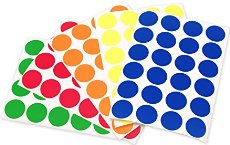
This is a simple and fun activity that can keep your little one busy.  At the office supply store they have those bright colored labels in the form of circles.  You can buy them pretty cheaply.  I give my toddler a couple of sheets of those stickers and he loves putting them in different designs on a piece of construction paper.  Another idea for a fun craft would be to paint or color over the paper after they put the stickers on.  When you take the stickers off, you have an interesting and fun polka dot design.  I was surprised how entertained my toddler was with this simple activity and the best part was that it didn’t cost hardly anything.  If you plan on turning it into an art project then you will want to use a lighter color for the background paper.

3.  Bubber

51pdwRTTG5L._AA160_

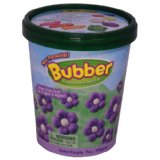
I am not a big fan of play-do.  I kind of cringe inside when one of my kids asks if they can take the play-do out.  I loved the concept of play-do and having the kids create things that they can mold but I hated the mess that it made or when it would get stuck in carpet.  A friend of mine introduced me to Bubber.  Bubber is an amazing alternative to play-do.  It works just like play-do and your kids will have fun molding and creating all kinds of wonderful things but its not sticky like play-do on the carpet.  It is easy to either sweep or vacuum all the crumbs right away.  Even on the table surface it doesn’t stick or have to be scraped off.  You can either sweep the little crumbs into the garbage or I have had my kids go on a “Bubber” search and they pick up the crumbs and put them back in the container.  I no longer have to worry about it sticking to the rugs or scraping it off the tables. You can find Bubber on Amazon.

4.  Kid O a to z Magnatab (Lower Case) by Kid O

412b-pzvo2L._AA160_

This is a great addition to your different preschool activities.  A to Z Magnatab is a great way to teach your toddler or preschooler how to write their letters.  The Magnatab has magnetic beads for each letter of the alphabet.  The child takes the magnetic pen and traces each of the letters.  As your child traces the letter, the magnetic beads appear.  Then when they are done, they can push the magnetic beads down with their hands and start over.  I have this magnatab board on a shelf in my classroom and my toddler frequently grabs it for his “school” time. They have options of Lower Case Letter, Upper Case Letters or Numbers.   It is a favorite in our household.

5.  Bambino Luk System (Beyond123)

bam-wbbam-ctrlr

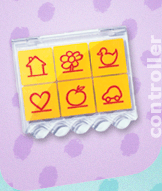
The Bambino Luk system is series of logic books for ages 3-5.  They have a a universal controller for all the books.  This controller consists of 6 picture tiles in a transparent case that are easy for a young child to use.  They have a demo on how to use the system on their website at beyond123.com.  My toddler loves these books.  Each book is a different set of puzzles to solve using the controller to solve them.  For example, on one of the books you have to match pictures or another your toddler decide which pictures go together based on sequencing.  What I love about these are that they are easy to use and the kids can use the same books as much as they like.  They have logic systems for older kids too.  The easiest way to understand how they work is to watch the demo.  This is another favorite activity that my toddler pulls out frequently to work on.

6. Bunny Peek A Boo by Smart Games

th-1

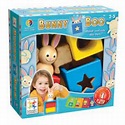
This is a game that ages 3-5 will enjoy immensely.  The game has a set of blocks and a bunny made out of wood.  It also has a set of cards with various pictures on it of how you can put the blocks and bunny together in different combinations.  I was surprised how entertained my toddler was on trying the different combinations.  This is a great way to teach kids at an early age some logical and critical thinking skills.  My 3yr old will ask for “Bunny Boo” frequently.   You can find “Bunny Peek A Boo” on Amazon or I also found it on Timberdoodle.

7. Drawing on a Bigger Scale

Supplies:  Butcher Paper, Washable Markers, Masking Tape

Sometimes when you change things up a bit, it can make a great impact on your child’s interest level.  I love using big butcher paper to invite creativity.  Here are some ideas that you can implement with butcher paper.  Roll out a big piece of butcher paper and tape it to a hard surface on the floor in your home.  Grab some comfy pillows and put a large pile of washable markers in the middle of the butcher paper and let your toddler go for it.  Another creative idea I heard of was putting the butcher paper taped to the bottom of a table top and let your kids pretend there are like Michelangelo while creating their drawings.  You could also tape it to a wall in your home and have them create an artistic masterpiece.  Get creative with how you create a drawing area for your child.

8.  Building Forts

You have to be willing to have a mess in your house for this activity, but I will tell you that my younger kids have had a blast for hours creating forts.  The only materials you need are blankets, pillows and a child’s imagination.  My children have created all kinds of elaborate forts that have delighted them for the entire day.  The most challenging thing for me in this activity is letting them create elaborate messes in my home.  I have to just not think about the mess when I see the kids grab all the couch cushions and blankets from the linen closet.  Its worth the delight that they are having in using their imaginations.  So, fort building is encouraged in our house as long as they pick it up at the end of the day.

9. Wedgits (Blocks)

th-2

Wedgits is a unique set of blocks that my kids call “Pyramid” blocks because when you put them together the kids think it looks like the top of a pyramid.  There are all sorts of designs that you can make with wedgits.  The more wedgit blocks you have the complicated the design can be.  We ended up buying another set to add more blocks because our older kids were wanting to make more complicated designs.

10.  Create Box

My kids and I have gone on a field trip to a place called “Creation Station”.  The Creation Station was a place where they had all sorts of different supplies that kids could use to create whatever they wanted.  They had paper towel rolls, gears, duct tape, cardboard, scraps of paper and many more different types of materials for the kids to create.  You can have a box like this for your preschooler at home.  Some of the things you can fill it with are paper towel rolls, various colored tapes, pipe cleaners, scraps of paper, cardboard, and other various creative materials.  Anything would work. You can put it all in one “Create Box” that you can pull out and have the kids create something during “school” time.  Its fun to see what they create!

Resources:

TinkerLab-A Hands-on Guide for Little Inventors by Rachelle Doorley

51LiT07ViXL._SX367_BO1,204,203,200_


Some of the ideas that I mentioned above are in this book.  This book has many more ideas to implement creative activities for your preschooler.  The author does an amazing job of explaining and also illustrating how to implement the various ideas.  I originally checked out this book from the library to see if it would receive a permanent spot on my library shelf and I found out that it does deserve to be part of my library.  I would use this as a resource for my little ones quite a bit.  Its my favorite book on preschool activities so far.

Tips-

One thing I have found to help make the activities more enjoyable is if you only let them do these activities during “school” time.  When I only pulled out some of these activities during “school” time, they looked forward to playing or doing them and didn’t grow tired of them too quickly.  Now some of the activities that I mentioned above like building forts are done anytime and throughout the day but other activities I have designated for only “school” time.

5 Favorite Homeschool Resources!

5 Favorite Homeschool Resources-

Throughout our homeschool journey there are different resources that you can use to add to your homeschooling experience.  I enjoy finding resources that make homeschooling more interesting or hands-on for my kids.  I will take a subject like Math and then find ways to do hands-on activities or projects with the concepts that we are learning.  These are 5 resources that I visit quite often to help me throughout my year.

  1. NotebookingPages.com

npc-logo-450x75

I love this resource! Notebookpages.com has hundreds of options for different notebook pages.  For example, if you are having your child read a story or biography for school, you can print off a notebook page that they made for book reports and have your kids fill it out at the end of reading the book.  They have notebook pages for about every subject that you would teach.  They even have alphabet and preschool type notebook pages you can print for your little ones.  I do not like worksheets and this is a creative way to avoid the worksheet boredom.  Instead of filling out a worksheet on the book they read, they are illustrating and writing a summary of what the book was about.  They also have a Notebooking Publisher App, so that you can create your Notebook Pages if you don’t see the notebook page you want.  You can use their notebook pages as a free member with limited access or you can join their lifetime membership and have access to all their note booking pages.  Try it for free and see if you like it!

2. HomeschoolShare.com

hss_banner_1000

This is a great resource for homeschoolers.  Homeschoolshare.com is a site where homeschoolers create lap books and unit studies for free.  You can download any of their lap books or unit studies and use them for your schooling.  I recently needed to find a small unit study on Volcanoes for my 7 year old and I found it on homeschoolshare.com.  This is a wonderful way to add to your curriculum if your child wanted to learn more about a subject.  Sometimes during our school year, I just have my kids tell me a subject or topic that they are interested in and we go to the library for books on that topic and then look online for resources that would teach about that topic.  This site can have those resources already created for you from other homeschoolers.  Brilliant idea!

3.  TeachersPayTeachers.com

homepage_regular_board

This is a site a created curriculum created by teachers.  You can join Teacherspayteachers.com for free and have access to all these amazing resources for teaching various subjects. Some of the products created are free and many of them are for a small fee.  For example, I was wanting to teach a science unit on weather to my son and I found this amazing weather unit study that had all the different notebook pages and experiments I would need to teach about weather for $6. Especially in the elementary years, you can ask your kids what they want to learn more about and then search for it on this website. There are tons of teachers that have contributed to this site. This site is created for any teacher whether you are homeschooling, private or public.  This means that not all the resources created will work for homeschoolers but I found that many of them did work, so its worth checking out!

4. Discovery Education Streaming Plus

I found this resource a few years ago and I use it frequently in my homeschooling.  It’s a membership that you sign up for that has short videos on every subject imaginable.  This is a great way to add a visual illustration of whatever your teaching.  For example we were studying the Lewis and Clark Expedition in history and used Discovery Education Streaming Plus to watch a video on the subject.  When I put the grade of my kids and the subject, a bunch of videos that fit in that category popped up for me to choose from. They had every type of video on Lewis and Clark including cartoons and documentaries.  This resource can be expensive.  The normal price for a year membership is $365 dollars for the year.  The best and most economical way to buy it is from Homeschoolerbuyersco-op.org.  They have many people buy it at the same time so you can get it for 60% off right now on their site.  We use it often enough in our homeschool that its worth the price but you would want to think about how often you would use it and whether it worth the investment for your homeschool.  If you click on Homeschoolerbuyersco-op.org above, I have linked it to the Discovery Education Streaming Plus deal that they are having right now.  They will also allow you to try it for a 30 day trial for free!  So you can try it for free to see even if you would use it.

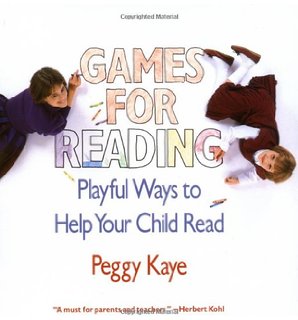
5.  Peggy Kaye “Games” Series

51FOcl+wOfL._SL500_PIsitb-sticker-arrow-big,TopRight,35,-73_OU01_SS115_514tEArHUTL._AC_UL320_SR298,320_51IFOYcFIKL._AC_UL320_SR282,320_

Peggy Kaye has written a series on different games to incorporate in various subjects. Her 3 main books that we have are “Games for Reading”, “Games for Math” and “Games for Writing”.  These books are excellent resources for adding some hands-on activities to your normal everyday subjects.  We have used the “Games for Writing” the most because of my reluctant writers.  I was able to get my reluctant writers to have fun with writing because it was in the form of a game.  Peggy Kaye’s books have always had a spot somewhere in our library of books that we continually use.  If your kids are having trouble seeing the value or fun in reading, writing or math, check these books out. You can find her books on Amazon for around $15.

These are just a few of favorite resources that I am using or have been using in my homeschool.  Hopefully you can find one or more of them helpful to you in your homeschooling.  Enjoy!

Homeschooling on a Small Budget

There are so many options out there for curriculum and there are so many things you could buy for homeschooling.  Homeschooling could get expensive but there are ways to save money with homeschooling that make it affordable on a smaller budget.  My hubby has owned his own business for over 20 years and there have been some feast times but we have also had some pretty drastic famine times as well.  During those “famine” times, I have had to find creative ways to homeschool for almost free.  Here are some helpful ideas that I have found when I needed to work off a smaller budget.

51GbdS1TVXL._AA160_

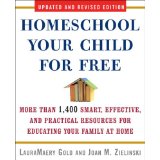
This is an excellent resource that has over 1,400 practical ideas on how to save money in homeschooling.  Even though I read this when I had already been homeschooling for awhile, it had many ideas that were new to me.  Each section covers a different subject or area in homeschooling.  I loved how they even had categories for Pre-school, Public Speaking and Journalism.  They didn’t just address the main subjects of homeschooling but they also wrote about many electives that homeschoolers would want as a part of their curriculum.  I usually think books are valuable even if they have one or two amazing ideas, but this book had many practical ideas that I have or would use.

2. Homeschooling Potpourri

hsplogo-high-resl

This is a hidden gem that maybe some of you do not know about.  Homeschooling Potpourri is a used curriculum bookstore for homeschooling.  They take used curriculum from homeschoolers and give them money to spend in the store or you can just buy used curriculum at a big discount.  They are located in Kirkland, Washington and have many options of curriculum that you are probably looking for.  I usually try to check with Homeschooling Potpourri before I buy my curriculum at full price.  Another service that they provide, is that you can request the curriculum you are looking for and be put on a waiting list.  They will call you when someone comes in with that curriculum and its yours. For the more popular curriculum like Apologia Science, you will want to call early because the waiting list can be long.  I was in there the other day and purchased “Mathtacular Word Problems” DVD which retails for $24.99, still in its package, not even opened for $12.50.  Its a great way to save money.

3. Homeschooler Buyers Co-op

This is an amazing resource that I found a few years ago.  Its a brilliant idea of a homeschool family setting up a website where homeschoolers can buy curriculum at the same time to get a big discount.  This is how it works, you go on the website and look for curriculum that you want to buy.  When you find a curriculum or product you want to buy, you sign up through the website to buy it.  The homeschooler buyer co-op designates a certain time they will buy it and because a bunch of homeschoolers sign up to buy it, the company gives a big discount.  For example, right now they are selling subscription to “God’s World News” for this year.  There is a savings of 68% because of the amount of people that have signed up to buy it on Sept. 20th.  The best part of the homeschooler buyers co-op is that it is free to join!  This is a way to save money on those popular curriculums or products you want for your homeschooling.

4.  The Library, Internet and A Printer

th-6

The Library might be a more obvious money saver but I wanted to list it because during those financial “slim” times in our lives, it has become a wonderful resource for our homeschooling. I actually love the resource of the library regardless of whether or not I can buy the books.  Its a great tool in a homeschool mom’s toolbox of resources. The way that we used the library was with Sonlight Curriculum.  Sonlight curriculum is a literature based curriculum, so I would order the teacher’s manual from Sonlight and then get the books from the library.  I also used the library to create various unit studies for the kids.  For example, my daughter recently wanted to study penguins and Antartica, so we went on the library website and ordered books for those subjects.  I received notice that they were on the hold shelf for me the next day and my daughter was off to the land of penguins who lived in Antartica.

The internet and a printer are a Homeschool Mom’s best friend.  When my printer is down, I tend to panic and I am bugging my husband to fix it.  There are so many free resources on the internet that you can print out.  You can practically google any subject and find free print outs or numerous ideas for science and art that you can easily put together.  The “Homeschooling Your Child For Free” book has numerous websites that you can check out.  A couple of my favorites are Khan Academy and Quizlet.  Khan Academy teaches kids math and science.  My kids have used it for extra help in their math.  Its a great way for when you are stuck on a math concept and need someone else to teach your child.  Khan Academy uses video to teach the kids different concepts.  Quizlet is an amazing resource that isn’t fancy but very useful.  It creates flashcards for your kids to practice just about any subject.  My 14yr old has used it for learning the terms for his Apologia Science.  You can create your own flashcards or most likely someone else already created them and you can just search and find the flashcards already done.

Another resource on the Internet  are free teacher planners, but if you like color it might not be as economical to print all the colorful teacher planner pages as it would be to buy a planner.  If you don’t mind black and white, then it would be much more economical to find the free planners online and print them.

Statistically speaking,  they have done research on homeschoolers and how the students did in their overall homeschooling experience.  Kids who were homeschooled with every option possible available to them versus homeschoolers that were on a small or strict budget performed at the same academic level.  You don’t have to spend alot of money to give your children an amazing education.  What ways have you found that have helped in saving money for homeschooling?  I would love to hear your ideas.

3 Experiments That Will Get Kids Excited About Science!

I am a science geek at heart.  I love how many different things fall under the subject of science.  There are so many different things you can study and learn about when it comes to science. Even when I was young, I wanted to find out how things worked or the science behind different things in the world. One of the best parts about science are the experiments!

Kids can learn a scientific concept but when they see that concept in action, they will have more understanding of how it works.  I also have had fun using science experiments in my object lessons when I teach children’s church.  I have a favorite site called madaboutJesus.net .  They have excellent science experiments for many different lessons in the Bible.  I have found out that its important especially if you are demonstrating the experiment, to try it out first on your own.  There are usually tweaks that need to happen to get the desired result.  All my kids love to do science experiments, but sometimes there are certain experiments that have a “wow” factor for the kids.  I like to randomly do some of these experiments just to get the kids excited about science or to start a discussion on why the experiment did what it did.  Here are 3 experiments that have been exciting to my kids….

  1. Elephant Toothpaste

th

Elephant Toothpaste is an all time favorite with my kids.  It has quite a chemical reaction that is fun to watch.

Materials:  –16oz or 24oz empty plastic bottle, hydrogen peroxide 6% (you can find this at your local beauty supply store), dish soap, yeast, warm water, food coloring (optional)

Elephant Toothpaste is a common scientific experiment where oxygen gas produces the release of oxygen in a form that we can visualize. The final product (visualization after mixing the ingredients together) appears as a thick foam that looks like a toothpaste. This is a messy experiment that you would want to do outside or we bought one of those tin foil baking dishes that caught all the foam.

How to make Elephant Toothpaste:

Take the package of yeast and mix it with half a cup of warm water.  Let this sit for 10 minutes.  If you don’t let the yeast sit, the experiment will have less of a reaction.  Meanwhile set the empty plastic bottle in a wide short glass to stabilize it.  I have found this to be helpful in not having the bottle tip over when you get the chemical reaction.  Put on a pair of plastic gloves and fill the bottle up with 8oz of hydrogen peroxide.  If you are using 6% or more for the hydrogen peroxide, you will want to wear gloves because the peroxide can burn your skin and turn it black.  I don’t let kids do this part, I do the pouring and wear the gloves just to be safe.  Next put a couple of tablespoons of dish soap in to the bottle and carefully mix the two ingeridents.  Now pour the yeast in and watch the elephant toothpaste emerge from the bottle.  Its quite a reaction.  You can add the food coloring right before the yeast if you want your toothpaste to be a different color.

Tips/Tricks:

If you want a bigger chemical reaction you can buy a stronger hydrogen peroxide at most beauty supply stores.  We did 9% and 12% strength.  The 9% was about perfect for indoors but any higher percent and you would want to be outdoors.  If you do use the stronger hydrogen peroxide don’t forget the gloves!  You do not want your fingers turning black.  Another helpful hint is to use a funnel when pouring ingredients into the bottle.  If you use just 3% hydrogen peroxide, you will still get a reaction just not as impressive.  Check out Elephant Toothpaste experiment demonstrated on youtube to give you a better visual of what its supposed to look like.

2.  Crushed Can Experiment

images

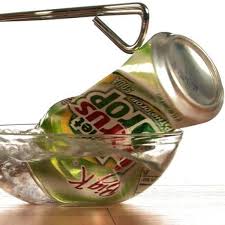
This experiment has an immediate reaction of letting the pressure of air crush a can.  Air pressure is all around us but we don’t really notice it most of the time.  This experiment demonstrates how powerful air pressure can be.

Materials:

Empty soda can, stove top or hot plate, Cooking tongs, gloves, Bowl, cold water

Directions:

Put some really cold water in a medium or large bowl (I used a mixing bowl).  Then put about a tablespoon of water in the bottom of the empty soda can just to cover the bottom of the can.  Put the can on the stove (you can use a frying pan underneath if you don’t have a hot plate) and then turn on the stove.  Wait until the water is boiling in the can.  You will hear it boiling and see the water vapor rising.  Wait about 1 more minute, then grab the tongs.  Use the tongs to pick up the can and plunge it upside down in the cold water.  The can will immediately implode. Steve Spangler Science does a great job of explaining the science behind the crushed can on their website.

3. Walking on Eggs

th-5

You can walk on eggs without them breaking.  This has a “wow” factor because the kids don’t think that you can.  The first thing you do is try to walk on one egg and it will crush right away, but you can walk on eggs if they are all together in a dozen in the carton.  I ripped off the lid of the egg carton and staggered 6 dozen eggs.  A key to getting it to work the best is to go bare foot and to make sure your weight is even.  You can also show your kids when you squeeze an egg sideways as hard as you want, it will not break.  The egg is unique in how God made it because its one of most delicate foods, but also one of the strongest. The egg will break by itself but when you put it with the dozen, you can walk on them and not have any break.  This is also a great Sunday School lesson on unity and working together. You can find many examples and tips on how to walk on eggs on youtube.

Hope you have fun trying these experiments.  There are many more science experiments that are fun for kids to do that have become favorites in my family.  I hope to share more science experiments in the future that you might have fun trying.

What are some favorite science experiments in your homeschool?

A Clean House and Homeschooling? Does that idea exist?

For my type A personality my home probably will never be as clean and organized as I want it to be until the kids are grown.  But the Lord is showing me all the time in different ways to enjoy the season I am in while my kids are young.  I am enjoying the journey of homeschooling but I also want to have a balance with the cleaning of my home.  I do think you can have a clean home and homeschool.  I don’t think your home will always be perfect if you are homeschooling because your kids are always there.  I loved this sign I saw recently in a store that said “Sorry for the mess, we live here.”.  This sign made me laugh because it’s so true when it comes to homeschooling. When I do decide to make an extra effort to have my house be immaculate, you would probably hear one of my kids saying “Mom, is someone coming over tonight?”.  In our home the kids are usually doing various science projects, putting together puzzles or creating new worlds with the cushions off my couch.  I have to resist wanting to pick up that lovely puzzle that my 7 year old has been working on for a week in the middle of my living room.  I have learned in my various years of homeschooling that its okay if there are puzzles on the floor or science experiments in my kitchen, its all part of homeschooling.  All that to say I still think its important to work as a family to maintain somewhat of a clean house even with the challenge of homeschooling. It also teaches the kids life skills, so that they can learn what it takes to maintain a home when they have their own family.

One of the ways we implement having a clean house in our homeschooling is assigning the kids chores.  This year I wanted to keep it as simple as possible with chores for my kids.  I took some colorful 3×5 cards and wrote down all the main chores that it would take to keep the house looking decent.  I also wrote down “Lunch Duty” and “Dinner Duty” on one card each to give out to one of my children each day.  We have 5 children and 4 of them are old enough to do chores.  Each day I give 3 cards with one chore on each card to each child.  They are supposed to complete the cards then hand them into their school box by the end of the day.  This has worked really well and I have been able to maintain the system because its simple.  We told the kids that chores were 5 days a week and then on the weekends we just help each other out as a family if something needed to be done.  Each day they get their chores done, they earn part of their allowance.  If they choose not to do their chores that day, they don’t get that money for the day.  We like to do allowance because we want our kids to learn about managing money.

Another way that has helped keep our home clean is teaching the kids to have a  “Morning Routine”.  My kids “Morning Routine” has to be done before 9am because we try to start school around that time.  The “Morning Routine” is to get up, get dressed, clean their room, eat breakfast and we encourage them to spend time with Jesus during this time.  We start when they are little, so eventually I can say to them, “Did you do your Morning Routine?” and they know what I am asking.  This has helped them get ready for their day and maintain cleaning their rooms.  It doesn’t always work perfectly especially with my teenagers, so sometimes we have surprise inspections of rooms.  I have had kids try and stuff everything under their beds or in their closets and call their rooms clean.  Sometimes it hard to keep a straight face in the creative way they have tried to hide dirty clothes or other junk in  their room.  I figure its all part of the process of training my kids.

These are just a couple of ways that have helped us stay more organized as a homeschool family.  A couple of resources that I that I have found to be helpful in organizing my home are….

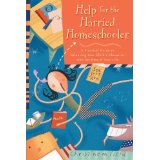
Help for the Harried Homeschooler by Christine M. Field

51UuCD6GddL._AA160_

The author has some great hints and tips on chores and just keeping an overall organized home.  The book isn’t just about keeping a clean and organized home but also covers about every area in homeschooling.  Its helpful for new or veteran homeschoolers.

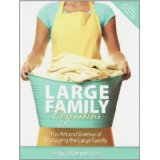
Large Family Logistics by Kim Brenneman

51uJVDcRU5L._AA160_

I think this is one of my favorite books on home management.  It has a ton of helpful ideas on organization and keeping the house clean in the midst of craziness of life.  Even if you don’t have a big family, the ideas are still helpful and I would encourage you to read this book.

Enjoy the moments and season that you are in, especially if you still have little ones.  I am still in the process of learning its okay if my kids want to leave out different projects and build different kingdoms in my home.  This is a short season that I intend to enjoy every moment that I have with them.

Helpful Household Tips:

Do you want to get rid of those pesky fruit flies?  I have found a solution that works quite well.  Fill a glass with apple cider vinegar and put in about 1 tbs of dawn soap.  Put it wherever you are having fruit fly problems and its a trap for those fruit flies.  They are attracted to the apple cider vinegar and will fall into the glass and not get out.  I have captured a ton of fruit flies by doing this.  It needs to be change every couple of days.  

Drink Bands

Unknown-5

My kids would constantly get a new glass every time they wanted a drink of water. One of the reasons that they would do this is because with 5 kids, they would forget which one was their glass.  I have a friend with 7 kids and she has this genius idea that has been around for awhile, but I didn’t know about it.  She uses drink bands.  They were these colorful bands that go around a drinking glass so that each kid would have their color and know what glass was theirs.  You can buy a set of 10 or them on Amazon for around $10.  This has helped in the amount of dished we wash and we don’t have kids fighting over whose glass they thought they might have.  I assigned a different color band to each kid.

Which Teacher Planner Should I Use?

As we are about to start our new homeschool year, I start to think about what kind of teacher planner I want for the year.  We homeschool year around but our new school year still starts in September.  Some homeschoolers use teacher planners to organize their days and keep track of where they’re at with each of their children.  Some homeschoolers do not see the need for a planner especially if their kids are younger.  I am definitely in the first category.  I love planners and seeing where I am at or how much I have gotten done.  A planner helps me see the gaps on things that I might be not getting to and might need more attention.  Here are 3 teacher planners that I think are excellent choices for homeschoolers.

1.  My Well Planned Day

192008

I have used this planner for many of my years of homeschooling.  I love how it is made for homeschoolers.  There are sections for keeping book lists and field trips that you plan for each month.  I think my favorite feature is how the planner caters to teaching multiple children.  One of the most important features I look for is whether I will be able to use it with multiple children because of the 5 children in our house.  There is also a section for planning out your meals and inspirational articles to encourage you in your journey of homeschooling.  The price point is also quite good at $26.95 for the planner. You can find it at headua.com or christianbook.com.  They also have an online version planner that is an option on the website called mywellplannedday.com.  The online version is offering a 30 day free trial if you want to check it out.  I prefer the paper and pencil method but if you like the tech version for things, it may be worth checking out.

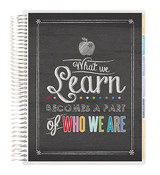
2. Teacher Planner by Erin Condren

p19pircqdefa61rlt16junhvag177

What attracted me to the Erin Condren Planner were the lesson pages. I love the amount of room in the lesson pages that allows me to fit multiple children.  Erin Condren teacher planners are unique because you can customize them in many different ways.  For example, if your homeschool has a name, you can put that on the front cover.  She also has many other different unique options that you can add to your planner.  One of favorites was the snap in sticky notes.  She created a plastic insert that has multiple sticky notes that can snap into you planner on the pages your doing your lesson plan.  I take numerous notes about ideas that I have for each of my lessons so this was a nice feature for my planning pages.  She also has these amazing inspirational quotes throughout the planner. Erin Condren Planners are not made for homeschoolers so there are pages that do not apply to homeschoolers.  There are blogs and youtube videos that homeschoolers have made on showing how they adapted and repurposed those pages to work for homeschoolers.  The price point for this planner is quite a bit more money.  You would have to decide if the customizable planner was worth the money.  Erin Condren planners are about $59.  I have done the free planners that you print off online and by the time the year is up, I have spent almost that same amount in ink on the free planner from online.  Its a well thought out planner worth checking out.  You can find it at erincondren.com.

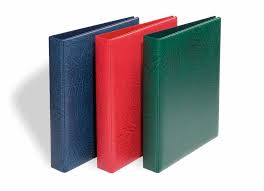
3. Notebook Paper, Pen and A Binder 

imagesUnknown-2

Okay, you are probably going to laugh, but the last “planner” that I recommend is notebook paper, a pencil, and a couple of binders.  I have a child in highschool this year and I have found, in all the planners that I have researched or tried, that there is not enough room for me to write out each of the details for his assignments.  He is more of an independent learner at this point and I need to communicate in writing to him what each task is about.  I have two binders for my highschooler.  One of the binders is a small thin binder with notebook paper that I write out his daily assignments with check boxes.  The other binder is a 3 inch binder that I have dividers in for each subject and important information I keep that are required by state law for his high school records.  Every time he hands in an assignment, I put it in the binder under that subject.  I love the idea of the binder keeping his assignments because I can look at the binder and see where there are gaps.  For example, if my science section is full of assignments but my fine arts sections is empty, I can see right away that I need to put some focus on fine arts to add to his high school records.  Lee Binz calls this method of keeping records being a “Binder Queen”.  One of the best things about doing planning this way is the price.  It does not cost much to buy a couple of binders, notebook paper and some pens.  I use the teacher planner for my 3 younger kids and the notebook paper for my highschooler.  Even in teacher planners I am eclectic.

A Couple of Helpful Hints for Using Teaching Planners-

  1.  When using a planner for multiple children, a creative way to help with that is using different colored pens for each child’s assignments so you can clearly see who is doing what.
  2. You can use a highlighter after the child completes an assignment to show that what they have accomplished and what they still need to get done.

Hope you have an amazing start to your new school year!

5 Favorite Homeschool Books for Newbies or Book Addicts Like Me

I confess that I am a little bit dangerous when it comes to bookstores.  I am probably not to be trusted around curriculum fairs either.  I love books and I especially like books about teaching or homeschooling.  Even though I have been homeschooling for almost 10 years, I will still read “how-to” homeschool books because I feel you can always learn something new that you may not have thought of for homeschooling.  Here are a few of my favorites that I have already read or have been reading…

  1. Educating the Whole Hearted Child by Clay and Sally Clarkson

th?id=OP

This is an excellent book that teaches training your children in discipleship and academics.  It has recommendations of curriculum to use but its not the main purpose of the book.  The authors want to encourage you as the parent in training and discipling your child using the curriculum that best fits your family.  Its an excellent foundational book to read for people who are new to homeschooling or for veteran homeschoolers who want a different perspective.  I read it only a couple of years ago and I was encouraged and wanted to adapt many of their ideas.  I wish I had found it sooner.  A bonus part of the book are the different forms that you can copy at the back of the book that help with the organization of your homeschool.

2. Help for the Harried Homeschooler by Christine Field

51UuCD6GddL._AA160_

The practical advice in this book makes a great resource for new homeschoolers and veterans that want new ideas.  The author goes over everything from discipleship to life skills to academics.  I appreciate her sense of humor and her style of writing.  Some of my favorite sections have been when she addressed life skills with kids and  structure vs. freedom style of homeschooling.  She also had a section for homeschoolers that feel “burned out”.

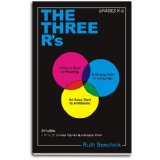
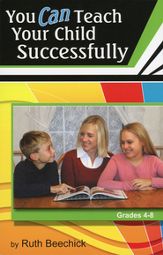
3. The Three R’s and You Can Teach Your Child Successfully by Ruth Beechick

41wUKOgQ8sL._AA160_19047

For new homeschoolers, this a must have book.  It teaches how to incorporate reading, writing and math into your everyday life.  It is very helpful in helping homeschoolers that are teaching the K-3rd grades.  The creative ideas that she suggests are easily done in every day life.  She also wrote a book for the 4th-8th grades as well.  Ruth Beechick is probably one of my favorite author’s on homeschooling.  Sonlight curriculum tends to follow some of her style.

4. The Well Trained Mind by Susan Bauer

51fFxUiunWL._AA160_

For anyone who is interested in the classical educational model, this is the book for you.  My love of research and books compelled me to read this book and I found it an enjoyable resource.  Our homeschool does not follow the classical method of education but we do incorporate parts of it.  This book is well done and easily understood.  The author also has curriculum that we have used that goes along with her classical educational method.  There are other excellent books on classical education but I felt like this one was the most understandable and detailed for me.  Some of her recommendations for curriculum will be outdated unless there is a new updated version but the information is still valid and good.

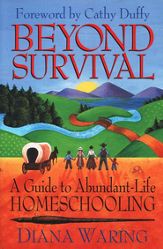
5. Beyond Survival:  A Guide to the Abundant Life of Homeschooling by Diana Waring

00237

I appreciate this book and how the author points out the importance of what education really is and what it can look like in a home with multiple ages.  I have gotten the privilege of hearing Diana Waring in her own home with my homeschool group at that time and the wisdom she can give homeschoolers who are still on the journey is invaluable.  She has authored other books and has her own biblical history curriculum. We enjoy listening to her amazing history audio cd’s that I will put in a review soon on this blog.

Hope enjoy these books as much as I have!  They have a permanent spot on my bookshelf!

3 Homeschool Blogs You Should Be Following

Some of the most amazing ideas that I have received as a homeschooler is from other homeschoolers who are walking through the journey or have already graduated and are imparting wisdom to those of us still in the middle of the adventure.  I love reading homeschool books and listening to different teachings on homeschooling.  If I’m not sure how to do it, I research it and find out.  I also learn and get a ton of ideas from different homeschool blogs that people are writing.  Here are a few of my favorites…

Weird Unsocialized Homeschoolers-

I love the author’s sense of humor in her posts.  There is all kinds of ideas on homeschooling and its separated by the different age group of kids you are teaching. The author has an emphasis on Hands-on Learning.  Its an excellent resource to find hands-on projects to fit your different lessons.  She has even written a book called “Hands on Learning”.  Worth checking out, especially if you have a child that loves or needs the hands on learning.

The Unlikely Homeschooler-

This blog is excellent resource for new and seasoned homeschoolers.  The author has an eclectic selection of creative homeschool ideas for preschool, elementary and middle school.  My favorite section that she has is “Homeschooling 101” where she has a section called “100 resources for Newbies”.  She also explains how she organizes her schooling and plans out her year.

1+1+1+1-

Last but certainly not least is the “1+1+1+1” blog.  If you have little ones and are starting to homeschool at the beginning with your preschooler or early elementary then this blog is for you.  The author does an amazing job of giving ideas for early elementary that are very creative.  I am definitely using some of her ideas on my 3 year old this school year.  She also gives links to connect you to the sites where she gets her different projects.  

I enjoy learning from other people’s journeys through homeschooling.  I am sure there are even more wonderful homeschool blogs that I have not discovered as my favorites yet, but these are my top three for now.  Who would be in your top three blogs for homeschooling?

Sonlight Curriculum

Sonlight Curriculum is a literature based curriculum.  This means that they use “real” books instead of textbooks to teach the kids the different parts of history, science, bible and other subjects.  They are a user friendly curriculum because they lay out each day for the homeschool parent.  The teacher manuals are a great way to keep records by writing in the dates that you do the different readings or activities.

I love the selection of the different books that they incorporate in the curriculum.  They do not always use just Christian literature.  I like this aspect because it gives my kids a worldview that I can bring the biblical perspective to.  We were recently reading a book on a young girl’s life that had her belief system in Hinduism.  This opened up discussions on what the Hinduism religion was about and how we can pray for the people in India and Tibet to find Jesus.  My kids enjoy the different variety of books that end up being part of our library.

A more economical way of doing Sonlight is to purchase their teacher manuals only and then get the books from the library.  If your local library does not have it, they can  usually buy it for you.  Our library has all this information online and we can reserve books for pick up.  You can also buy the books on a Kindle app for sometimes a fraction of the price of buying the actual book.  If you are going to buy the book, I would buy it from Sonlight.  Their prices are competitive with Amazon and you can order just one book and still get free shipping if you are a member with Sonlight.  If you purchase a teacher manual you are automatically a member on Sonlight.

Sonlight is a great curriculum for a new homeschooler but also enjoyable for a seasoned homeschooler.  I am quite an eclectic homeschooler, I enjoy a variety of different curriculum and tools to help the unique learning styles in each of my children.  Regardless of the curriculum that I am using, I usually have some kind of library of Sonlight books that end up being part of my year.  Check it out at sonlight.com.