My Favorite Part of My Day

The kitchen was in disarray, books were everywhere, witnessing to the fact that my kids do indeed read and the younger children had done an amazing job of turning my living room into a rather complex fort. In the middle of this chaos I found my somewhat frazzled self sitting down at the end of my day with a cup of tea and reflecting. Did I get any homeschooling done? Did I have a productive day? What is my definition of a productive day?

It was one of those typical homeschool days where I had felt like the day had flown by in a whirlwind of activities without being productive. I was determined on a daily basis to get my checklist of homeschool tasks done and yet it never seemed to get accomplished. Can anyone relate? Your days are busy as can be and yet you don’t seem to get to the homeschooling subjects that you wanted to. I began to realize in my early years of homeschooling that I needed to have a paradigm shift on what constitutes a productive homeschool day. This is when I discovered the beauty of “Morning Time”.

“Morning Time” is a phrase that I learned from Cindy Rollins who is a veteran homeschooler of 9 kids whom have all graduated from her homeschool. She is an amazing influencer and mentor in the homeschool community. She wrote a book called “Morning Time” that changed my perspective on what was important in my homeschool. I highly recommend reading her book to get an in depth look at what “Morning Time” is all about.

“Morning Time” is a set amount of time that I set aside with my kids to study the different subjects that I want them to learn. If we accomplish nothing more in our day than “Morning Time”, my day has been a success. These subjects are usually subjects that I have always wanted to study with my children, but we just don’t seem to get around to them. For example, we might study famous artists, Shakespeare, Plutarch, science, apologetics or a famous music composer. This is also the time that I do a continuous read aloud with the kids. My current read aloud with my teenage daughter is “The Count of Monte Cristo” by Alexander Dumas and my current read aloud with my younger two children is “Prince Caspian” by CS Lewis.

This is my favorite part of our homeschool day because we come together as a family and learn about the truth, goodness and beauty in the world we live in. A Shakespeare play that we are listening to or a novel that we are reading can lead to thoughtful discussions. Another benefit of “Morning Time” is seeing a family book culture emerge in our home where my kids will remember reading certain books or topics and those topics will pop up in random conversations. My children’s humor or comments start reflecting the books we are reading. They see an artist’s painting or hear a piece of music and recognize who or what they are because of what we have studied. In my opinion, this creates more of an education for my children then simply filling out a worksheet. If my goal is to create a love of learning, then I want to introduce them to many different aspects of the world around us.

I don’t want them to learn math with the mindset of just having to fulfill a requirement. I want them to see the unique mathematic equations that exist in our world. For example, the sunflower is a mathematical creation representing the Fibonacci numbers. I want my kids to begin to see learning as an opportunity to see the world in a new way. When we study Vincent Van Gogh, what is the story behind his famous painting of Starry Night? When we enter the world of Narnia by C.S. Lewis what do we see? What is the story saying about the world around us? What are the Biblical Worldview questions that my kids are struggling with?

I cannot have these conversations when the kids are working on their everyday worksheets at their desks, but I can create a space for these discussions to happen. I began to see how this was the learning that I desired my homeschooling to have. I made a decision in my early years of homeschooling, that if we didn’t get to anything else, but we made space for “Morning Time”, we had had a productive day.

“Morning time” can look quite different depending on the ages of your kids and your family dynamics. I had years when we had little toddlers and the “Morning Time” had to be short and during the baby’s nap time. Our current “Morning Time” is actually split between my younger two kids and my teens. I wanted to read deeper books with the teens that were not as relatable to the younger kids. Our schedule has changed as the kids have gotten older and now I am able to do a “Morning Time” in the morning with my younger kids and a different time in the afternoon for my teens. Although for most of our homeschool years, I did keep all five kids together. It was logistically easier, at that time, to keep them all together and not split them up.

“Morning Time” does not have to be in the morning. There were a couple of years that we still called it “Morning Time” but my sleep deprived teens functioned better in the afternoons. Find a time in your day that works best to meet your families needs. It does not have to be complex or long. You can simply start by having a 15 minute read aloud time where you sit down and read with all your kids. You can study whatever you would like with your kids that you think would interest them. Perhaps you would rather listen to a Shakespeare play together, explore a science book or read an apologetics book as a family.

One more important thing to remember is that “Morning Time” is a journey with your kids that doesn’t always go the way you expect. There have been many “Morning Time” days that have gone far from what was ideal in my mind. I sometimes wondered why I was even incorporating it in my day. Despite the days we had of chaos, I kept cultivating the habit because I knew I was planting seeds. When you plant and water seeds, you don’t immediately see growth, but the seeds are still growing. I chose to believe that I was cultivating learning even if it seemed, at times, that they weren’t listening. As some of my kids have reached their teens, I can see the seeds that I had planted and how they have grown. The “Morning Time” was worth it! It is a lovely tool to help cultivate an atmosphere of learning. It is a part of my homeschool that I have never regretted doing.

If this concept of “Morning Time” is something that you would like to incorporate in your homeschool day, I will list some resources below that were helpful in my study of what “Morning Time” is all about. I will also list what we currently are doing for our own “Morning Time” to give you an idea of different things you can do with your kids.

Resources for “Morning Time”

“Morning Time” by Cindy Rollins (cindyrollins.net)

“My Morning Basket” by Pam Barnhill (Excellent podcast on the different parts of Morning Time)

“Back to School Conference 2019” (found at cindyrollin.net)

(Cindy did two sessions in the above conference on how “Morning Time” works and she also walked through a typical “Morning Time” that she had done with her kids. You can still purchase the recordings even though the conference was last year)

Book List-

“Morning Time” with my teens

The God who is There by Francis Schaffer

The Great Divorce by CS Lewis

Plutarch Lives- Alexander

Much Ado About Nothing by William Shakespeare

Count of Monte Christo by Alexander Dumas

The Classic 100 Poems Edited by William Harmon

“Morning Time” with my 8 and 12 year old

Bible

Taming of the Shrew by William Shakespeare

Poetry- Emily Dickinson

Picture Study- Van Gogh

Animals by Thorton Burgess

Grimms Brothers Fairytales

Prince Caspian by CS Lewis

Process of Letting Go

When it comes to my kids, I hate this phrase.  What do you mean the process of letting go?!  These are children that I have carried in my womb for 9 months and I wanted to surround them with a mountain of bubble wrap to protect them from the outside world since they emerged to grace this earth with their presence.  To protect them from a fall or a broken heart is my job as their mom.  I am the hero that will save them!  

But the truth is, although I physically gave birth to each one of my children, they were never mine to begin with.  My husband and I are entrusted by God to help raise them. The truth is, that they are His.  The truth is, that I am not in control and cannot protect them from everything. Ironically, if I try to protect them from too much and not allow them to make mistakes in the safety of my home, then I might be setting them up for bigger falls when they leave the nest.  

So, I begin my journey to let go when they are young.  This is not an easy feat because I am a bit of a control freak by nature, the type of person who actually thinks that they have some control.  I have to fight this part of my personality and align with God’s intention in my parenting.  Yes, I am supposed to watch out for my children, give them wisdom as they grow and discipline when the need arises, but I am also supposed to let them make mistakes, let them fall and then pick them up.  

By nature, I am not what you would call “a nostalgic personality”.  I
don’t cry easily; even at funerals my eyes are dry and birthdays don’t
typically affect me in an emotional way.
But on the morning of my oldest son’s 18th birthday, I felt an immediate
panic and sadness that caught me off guard. I was surprised at the
intensity of emotion that came flooding over me. Had I prepared him
enough for life outside our home? Would he make good decisions? Would he be safe? Could he be successful in life due to the education I had given him?

I sat in my bed and my thoughts left me face to face with all of my
past mistakes; all the memories of each time I had failed as a mom. I
had to confront the reflection of my own inadequacy, and the decisions
I had made as a homeschool parent.
As I sat there, all I wanted was to go back and start over at the
beginning. If I had a time machine, I could go back and do it better.

I would raise my voice less.

I would hug that baby more often.

I would have lived “in the moment” with him- instead of worrying about
his future.

If I could go back, I would let go more.

Parents on the other side with grown children and more experience than me have related phrases such as “time flies” and “cherish the time that you have with your kids.”  I always had a bit of a dismissive attitude when I would hear them say this.  My unbelief was rooted in the amount of young babies I had at the time and the amount of diapers I was changing.  In my mind, in those moments of my life, this was not a quick process, but a Mt. Everest situation where I could not see the end in sight.  This definitely is not going to feel quick!  But you know what?  They were right.  Just a couple of months ago my oldest turned 18 and time did fly. I want to go back.  I can’t.  I’m learning to let go.  

Enjoying Shakespeare!

“To know Shakespeare provides a head start in life”- Ken Ludwig

Why teach my child Shakespeare?

My kids and I attended a couple of years ago a Shakespeare play of “Much Ado about Nothing.”  The director informed us before the play started that it would take about 15 minutes of listening to Shakespeare and then we would start to understand the story in its entirety. I thought the director might be a bit crazy.  I had not grown up learning Shakespeare or honestly have a desire to make it part of my life. The director of that play ended up being completely correct.  Within about 15 minutes, I was understanding the play and getting the humor.  It ended up being a delightful experience for me and my kids.

I started to research the benefits of learning Shakespeare and so my adventure begin with my kids and Shakespeare.  They weren’t crazy about the idea at first but I continued to teach little bits here and there.  I also exposed them to different plays and discussed the meanings of the language and story plot.  They started to enjoy it and in fact, my daughter started loving Shakespeare so much that she wanted to read the plays for herself. 

Shakespeare increases your child’s vocabulary and comprehension levels in their education.  Shakespeare also was a great influence in many authors that we see everyday.  He was a great influence in Jane Austen’s writing and also Charles Dickens.  We can see the writings of Jane Austen reflected in today’s books and movies.  When we introduce beautiful language into our kids education, it does indeed give them a head start in the literature world.  I would also hope, at least with my kids, that it helped them desire to read more beautiful language therefore helping their taste in books contine to grow and gain depth.

But how do I teach Shakespeare, you might ask?

My Favorite Resources for entering the World of Shakespeare-

1. “How to Teach your Children Shakespeare” by Ken Ludwig

This is an amazing book to start with.  If you just want to invest in one book to start your journey with your kids and Shakespeare.  Let this book be the one.  Ken Ludwig helps your kids develop a love of Shakespeare by having them memorize certain passages out of Shakespeare Plays.  He then explains phrase by phrase what each of these lines mean in the context of the play.  This helps the parents like me, who are not an expert in Shakespeare, easily teach our kids Shakespeare.

2. “Beautiful Stories from Shakespeare” by Edith Nesbit

(Found at Amazon)

These are lovely, understandable stories of Shakespeare’s plays. I would read one of these stories before we read the actual play so my kids would have background knowledge. Its important to build background knowledge before embarking into the play so that the kids have some frame of reference.

3. Shakespeare In Three Steps by Rebekah Shafer

(Found at SimplyCharlotteMason.com)

This is my latest find of Shakespeare that I love. These are the actual Shakespeare Plays for you and your kids to enjoy. We are studying Twelth Night right now. When you purchase “Shakespeare in Three Steps”, you get a book of a Shakespeare Play of your choice and the Audio of the entire play told with multiple actors voices. At the beginning of each is book is the synopsis of the play to help your kids build background knowledge before they listen to the play. The Audio is very well done! This is a simple way to enjoy Shakespeare with your kids.

4. Shakespeare 16 Books Story Collection by Tony Ross

(Found at Amazon or Costco)

These books are a delight for your younger reader. They feature 16 of Shakespeare’s plays in storyform. Even my teens will read one of these to gain background knowledge on a play.

5. The Bard of Avon by Diane Stanely

(Found at Amazon)

This is a children’s biography of William Shakespeare and his life.

6. Poetry for Young People- William Shakespeare by David Scott Kasten and Marina Kasten

(Found at Amazon)

This is exactly what is sounds like, a selection of poetry written by William Shakespeare

7. “Twelfth Night” by William Shakespeare (Folger Shakespeare Library)

(Found at Amazon)

I buy these versions of the Shakespeare Plays for my teens to read. We own four of them so far.

“Twelfth Night”, “Julius Ceaser”, “A Midsummer Night’s Dream” and “Much Ado about Nothing”

Shakespeare is a journey worth taking! Even if you just do a little bit to introduce your kids to William Shakespeare, it will enhance their literature study.

What is your favorite Shakespeare Resource?

Review-“Be Your Own Doctor”

I went out with a girlfriend of mine one night and she mentioned that she hardly ever goes to the doctor and tries “natural” ways to solve everyday sicknesses with kids.  I was curious on how she went about this so I asked her where she learned how to do these natural remedies for sicknesses.  She said she started by reading “Be Your Own Doctor” by Rachel Weaver M.H.   I am not against the medical world and I think there is a time and place, that if you are too sick and the “natural” ways aren’t working, then you should go see your doctor.  We have had severe emergencies in our family that we needed the atmosphere and help of a hospital and the medical world.  But I do think God has given us many things in this world like herbs and plants that aid in the healing process.  I think he has provided us with many different ways to help heal sickness and so I thought it was worth getting the book to satisfy my curiosity.

After spending some time with the book, I am hooked.  Rachel Weaver has so much helpful information that would help families in gaining knowledge on how to help the healing process of your everyday sicknesses.  For example, I learned that chamomile is a natural pain reliever for sore muscles.  You can easily take a chamomile bath by steeping some chamomile tea bags in a pan of water and then pouring it into your bath water.  Rachel Weaver also talks about salves which are like thick oils that you can use for medicinal purposes.  She puts the recipe in the book and tells you how to make it.  We used the “Green Salve” which is for every day scrapes, bruises or cuts on my daughter.  She had fallen and her arm was all scraped up.  When I put the “Green Salve” on her arm, she said the pain went away.  “Green Salve” is a natural antibiotic that takes the place of something like neosporin.

“Be Your Own Doctor” not only gives you a wealth of information on what different herbs and plants do, the author also includes many recipes on how to implement them in your life.  There are 101 stories of how people used “natural” ways to solve sicknesses. This gives you a excellent perspective on how the different remedies can be used in everyday life.  I am one of those people that if I like something, I am all in.  This made me appreciate the list of supply stores that she put in the back of her book, so that I could either purchase ready made salves, tinctures and other “natural” products or she listed companies that sold the different ingredients you might need.  The most economical way would be to grow the plants yourself.

Some items I just want to buy but other things like the “Green Salve”, I want to use more and make it.  It depends on whether you would feel ambitious enough to try some of the different recipes.  They are actually quite easy to do.  I am taking it one little step at a time.  I am picking a couple of things that I want to have ready medically in my cupboard.  I am also involving the kids by having them help me make some of the different recipes.  My daughter is especially excited to see the science behind the different things we make.

“Be Your Own Doctor” is a book worthy of your library in my opinion.  There are some recipes  and valuable information in there for everybody.  You can find the book on Amazon or at Rachel Weaver’s website which is bulkherbstore.com.  She even has kits if you don’t want to think about how to get stuff or how to start.

This was my adventure for the week.  Until next time….

5 Favorite Homeschool Resources!

5 Favorite Homeschool Resources-

Throughout our homeschool journey there are different resources that you can use to add to your homeschooling experience.  I enjoy finding resources that make homeschooling more interesting or hands-on for my kids.  I will take a subject like Math and then find ways to do hands-on activities or projects with the concepts that we are learning.  These are 5 resources that I visit quite often to help me throughout my year.

  1. NotebookingPages.com

npc-logo-450x75

I love this resource! Notebookpages.com has hundreds of options for different notebook pages.  For example, if you are having your child read a story or biography for school, you can print off a notebook page that they made for book reports and have your kids fill it out at the end of reading the book.  They have notebook pages for about every subject that you would teach.  They even have alphabet and preschool type notebook pages you can print for your little ones.  I do not like worksheets and this is a creative way to avoid the worksheet boredom.  Instead of filling out a worksheet on the book they read, they are illustrating and writing a summary of what the book was about.  They also have a Notebooking Publisher App, so that you can create your Notebook Pages if you don’t see the notebook page you want.  You can use their notebook pages as a free member with limited access or you can join their lifetime membership and have access to all their note booking pages.  Try it for free and see if you like it!

2. HomeschoolShare.com

hss_banner_1000

This is a great resource for homeschoolers.  Homeschoolshare.com is a site where homeschoolers create lap books and unit studies for free.  You can download any of their lap books or unit studies and use them for your schooling.  I recently needed to find a small unit study on Volcanoes for my 7 year old and I found it on homeschoolshare.com.  This is a wonderful way to add to your curriculum if your child wanted to learn more about a subject.  Sometimes during our school year, I just have my kids tell me a subject or topic that they are interested in and we go to the library for books on that topic and then look online for resources that would teach about that topic.  This site can have those resources already created for you from other homeschoolers.  Brilliant idea!

3.  TeachersPayTeachers.com

homepage_regular_board

This is a site a created curriculum created by teachers.  You can join Teacherspayteachers.com for free and have access to all these amazing resources for teaching various subjects. Some of the products created are free and many of them are for a small fee.  For example, I was wanting to teach a science unit on weather to my son and I found this amazing weather unit study that had all the different notebook pages and experiments I would need to teach about weather for $6. Especially in the elementary years, you can ask your kids what they want to learn more about and then search for it on this website. There are tons of teachers that have contributed to this site. This site is created for any teacher whether you are homeschooling, private or public.  This means that not all the resources created will work for homeschoolers but I found that many of them did work, so its worth checking out!

4. Discovery Education Streaming Plus

I found this resource a few years ago and I use it frequently in my homeschooling.  It’s a membership that you sign up for that has short videos on every subject imaginable.  This is a great way to add a visual illustration of whatever your teaching.  For example we were studying the Lewis and Clark Expedition in history and used Discovery Education Streaming Plus to watch a video on the subject.  When I put the grade of my kids and the subject, a bunch of videos that fit in that category popped up for me to choose from. They had every type of video on Lewis and Clark including cartoons and documentaries.  This resource can be expensive.  The normal price for a year membership is $365 dollars for the year.  The best and most economical way to buy it is from Homeschoolerbuyersco-op.org.  They have many people buy it at the same time so you can get it for 60% off right now on their site.  We use it often enough in our homeschool that its worth the price but you would want to think about how often you would use it and whether it worth the investment for your homeschool.  If you click on Homeschoolerbuyersco-op.org above, I have linked it to the Discovery Education Streaming Plus deal that they are having right now.  They will also allow you to try it for a 30 day trial for free!  So you can try it for free to see even if you would use it.

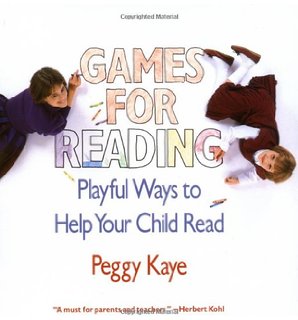
5.  Peggy Kaye “Games” Series

51FOcl+wOfL._SL500_PIsitb-sticker-arrow-big,TopRight,35,-73_OU01_SS115_514tEArHUTL._AC_UL320_SR298,320_51IFOYcFIKL._AC_UL320_SR282,320_

Peggy Kaye has written a series on different games to incorporate in various subjects. Her 3 main books that we have are “Games for Reading”, “Games for Math” and “Games for Writing”.  These books are excellent resources for adding some hands-on activities to your normal everyday subjects.  We have used the “Games for Writing” the most because of my reluctant writers.  I was able to get my reluctant writers to have fun with writing because it was in the form of a game.  Peggy Kaye’s books have always had a spot somewhere in our library of books that we continually use.  If your kids are having trouble seeing the value or fun in reading, writing or math, check these books out. You can find her books on Amazon for around $15.

These are just a few of favorite resources that I am using or have been using in my homeschool.  Hopefully you can find one or more of them helpful to you in your homeschooling.  Enjoy!

A Unique Learner

My 12 year old son was diagnosed with Auditory Processing Disorder a couple of years ago.  The easiest way to explain what that is if you are not familiar with the term is a dyslexia of the hearing.  He cannot process things through listening.  This made it very difficult to learn how to read and write because of how phonics works.  He does read quite well but only because I taught him with a whole language curriculum.  Phonics don’t make sense to him because he has a hard time processing the sounds.  He is brilliant in science and math but reading and writing are still a struggle.

I found an awesome curriculum that is for dyslexic students.  It is called the Stevenson  Curriculum.  Stevenson Curriculum is created for kids with learning disabilities.  We have been using their language arts program.  It has helped my son quite a bit.  They use mnemonic devises to teach the kids how to read, write and spell.  If my son can associate a picture or story with a spelling rule or phonics rule, he is more likely to remember it.  Stevenson Curriculum is worth checking out if you are working with a student with learning disabilities.  Its a great resource.