My Favorite Part of My Day

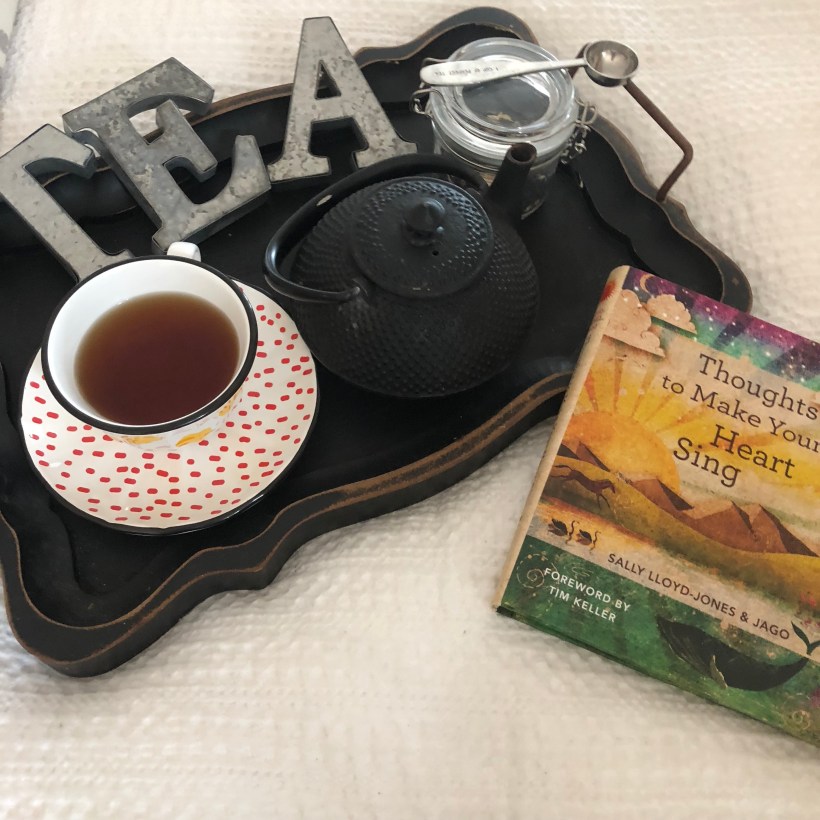
The kitchen was in disarray, books were everywhere, witnessing to the fact that my kids do indeed read and the younger children had done an amazing job of turning my living room into a rather complex fort. In the middle of this chaos I found my somewhat frazzled self sitting down at the end of my day with a cup of tea and reflecting. Did I get any homeschooling done? Did I have a productive day? What is my definition of a productive day?

It was one of those typical homeschool days where I had felt like the day had flown by in a whirlwind of activities without being productive. I was determined on a daily basis to get my checklist of homeschool tasks done and yet it never seemed to get accomplished. Can anyone relate? Your days are busy as can be and yet you don’t seem to get to the homeschooling subjects that you wanted to. I began to realize in my early years of homeschooling that I needed to have a paradigm shift on what constitutes a productive homeschool day. This is when I discovered the beauty of “Morning Time”.

“Morning Time” is a phrase that I learned from Cindy Rollins who is a veteran homeschooler of 9 kids whom have all graduated from her homeschool. She is an amazing influencer and mentor in the homeschool community. She wrote a book called “Morning Time” that changed my perspective on what was important in my homeschool. I highly recommend reading her book to get an in depth look at what “Morning Time” is all about.

“Morning Time” is a set amount of time that I set aside with my kids to study the different subjects that I want them to learn. If we accomplish nothing more in our day than “Morning Time”, my day has been a success. These subjects are usually subjects that I have always wanted to study with my children, but we just don’t seem to get around to them. For example, we might study famous artists, Shakespeare, Plutarch, science, apologetics or a famous music composer. This is also the time that I do a continuous read aloud with the kids. My current read aloud with my teenage daughter is “The Count of Monte Cristo” by Alexander Dumas and my current read aloud with my younger two children is “Prince Caspian” by CS Lewis.

This is my favorite part of our homeschool day because we come together as a family and learn about the truth, goodness and beauty in the world we live in. A Shakespeare play that we are listening to or a novel that we are reading can lead to thoughtful discussions. Another benefit of “Morning Time” is seeing a family book culture emerge in our home where my kids will remember reading certain books or topics and those topics will pop up in random conversations. My children’s humor or comments start reflecting the books we are reading. They see an artist’s painting or hear a piece of music and recognize who or what they are because of what we have studied. In my opinion, this creates more of an education for my children then simply filling out a worksheet. If my goal is to create a love of learning, then I want to introduce them to many different aspects of the world around us.

I don’t want them to learn math with the mindset of just having to fulfill a requirement. I want them to see the unique mathematic equations that exist in our world. For example, the sunflower is a mathematical creation representing the Fibonacci numbers. I want my kids to begin to see learning as an opportunity to see the world in a new way. When we study Vincent Van Gogh, what is the story behind his famous painting of Starry Night? When we enter the world of Narnia by C.S. Lewis what do we see? What is the story saying about the world around us? What are the Biblical Worldview questions that my kids are struggling with?

I cannot have these conversations when the kids are working on their everyday worksheets at their desks, but I can create a space for these discussions to happen. I began to see how this was the learning that I desired my homeschooling to have. I made a decision in my early years of homeschooling, that if we didn’t get to anything else, but we made space for “Morning Time”, we had had a productive day.

“Morning time” can look quite different depending on the ages of your kids and your family dynamics. I had years when we had little toddlers and the “Morning Time” had to be short and during the baby’s nap time. Our current “Morning Time” is actually split between my younger two kids and my teens. I wanted to read deeper books with the teens that were not as relatable to the younger kids. Our schedule has changed as the kids have gotten older and now I am able to do a “Morning Time” in the morning with my younger kids and a different time in the afternoon for my teens. Although for most of our homeschool years, I did keep all five kids together. It was logistically easier, at that time, to keep them all together and not split them up.

“Morning Time” does not have to be in the morning. There were a couple of years that we still called it “Morning Time” but my sleep deprived teens functioned better in the afternoons. Find a time in your day that works best to meet your families needs. It does not have to be complex or long. You can simply start by having a 15 minute read aloud time where you sit down and read with all your kids. You can study whatever you would like with your kids that you think would interest them. Perhaps you would rather listen to a Shakespeare play together, explore a science book or read an apologetics book as a family.

One more important thing to remember is that “Morning Time” is a journey with your kids that doesn’t always go the way you expect. There have been many “Morning Time” days that have gone far from what was ideal in my mind. I sometimes wondered why I was even incorporating it in my day. Despite the days we had of chaos, I kept cultivating the habit because I knew I was planting seeds. When you plant and water seeds, you don’t immediately see growth, but the seeds are still growing. I chose to believe that I was cultivating learning even if it seemed, at times, that they weren’t listening. As some of my kids have reached their teens, I can see the seeds that I had planted and how they have grown. The “Morning Time” was worth it! It is a lovely tool to help cultivate an atmosphere of learning. It is a part of my homeschool that I have never regretted doing.

If this concept of “Morning Time” is something that you would like to incorporate in your homeschool day, I will list some resources below that were helpful in my study of what “Morning Time” is all about. I will also list what we currently are doing for our own “Morning Time” to give you an idea of different things you can do with your kids.

Resources for “Morning Time”

“Morning Time” by Cindy Rollins (cindyrollins.net)

“My Morning Basket” by Pam Barnhill (Excellent podcast on the different parts of Morning Time)

“Back to School Conference 2019” (found at cindyrollin.net)

(Cindy did two sessions in the above conference on how “Morning Time” works and she also walked through a typical “Morning Time” that she had done with her kids. You can still purchase the recordings even though the conference was last year)

Book List-

“Morning Time” with my teens

The God who is There by Francis Schaffer

The Great Divorce by CS Lewis

Plutarch Lives- Alexander

Much Ado About Nothing by William Shakespeare

Count of Monte Christo by Alexander Dumas

The Classic 100 Poems Edited by William Harmon

“Morning Time” with my 8 and 12 year old

Bible

Taming of the Shrew by William Shakespeare

Poetry- Emily Dickinson

Picture Study- Van Gogh

Animals by Thorton Burgess

Grimms Brothers Fairytales

Prince Caspian by CS Lewis

Process of Letting Go

When it comes to my kids, I hate this phrase.  What do you mean the process of letting go?!  These are children that I have carried in my womb for 9 months and I wanted to surround them with a mountain of bubble wrap to protect them from the outside world since they emerged to grace this earth with their presence.  To protect them from a fall or a broken heart is my job as their mom.  I am the hero that will save them!  

But the truth is, although I physically gave birth to each one of my children, they were never mine to begin with.  My husband and I are entrusted by God to help raise them. The truth is, that they are His.  The truth is, that I am not in control and cannot protect them from everything. Ironically, if I try to protect them from too much and not allow them to make mistakes in the safety of my home, then I might be setting them up for bigger falls when they leave the nest.  

So, I begin my journey to let go when they are young.  This is not an easy feat because I am a bit of a control freak by nature, the type of person who actually thinks that they have some control.  I have to fight this part of my personality and align with God’s intention in my parenting.  Yes, I am supposed to watch out for my children, give them wisdom as they grow and discipline when the need arises, but I am also supposed to let them make mistakes, let them fall and then pick them up.  

By nature, I am not what you would call “a nostalgic personality”.  I
don’t cry easily; even at funerals my eyes are dry and birthdays don’t
typically affect me in an emotional way.
But on the morning of my oldest son’s 18th birthday, I felt an immediate
panic and sadness that caught me off guard. I was surprised at the
intensity of emotion that came flooding over me. Had I prepared him
enough for life outside our home? Would he make good decisions? Would he be safe? Could he be successful in life due to the education I had given him?

I sat in my bed and my thoughts left me face to face with all of my
past mistakes; all the memories of each time I had failed as a mom. I
had to confront the reflection of my own inadequacy, and the decisions
I had made as a homeschool parent.
As I sat there, all I wanted was to go back and start over at the
beginning. If I had a time machine, I could go back and do it better.

I would raise my voice less.

I would hug that baby more often.

I would have lived “in the moment” with him- instead of worrying about
his future.

If I could go back, I would let go more.

Parents on the other side with grown children and more experience than me have related phrases such as “time flies” and “cherish the time that you have with your kids.”  I always had a bit of a dismissive attitude when I would hear them say this.  My unbelief was rooted in the amount of young babies I had at the time and the amount of diapers I was changing.  In my mind, in those moments of my life, this was not a quick process, but a Mt. Everest situation where I could not see the end in sight.  This definitely is not going to feel quick!  But you know what?  They were right.  Just a couple of months ago my oldest turned 18 and time did fly. I want to go back.  I can’t.  I’m learning to let go.  

Rule of Six

You have this amazing plan in your mind on how each day is going to go for your homeschool.  Kids are eager to learn, the housework is getting done and dinner will, indeed, be served on time.  I probably do not have to tell you that things don’t always look like what we imagine in our minds. My ideals of a perfect homeschool day rarely become a reality.  I sometimes struggle with the question on whether I am doing enough or are we really covering the things that we need to do?  Every summer, I am in this reflective mode of evaluating how our homeschool year went.  Would I change anything?  What do I want to do different this year? Is it time to look at hiring someone that could do a better job than me? Okay, maybe I don’t want to someone else teaching my kids but in the moments of failure, it is a fleeting thought.

A couple of years ago, I had the privilege of taking a class online that was about bringing focus and alignment to your year. I actually try to take this class every summer before my homeschool year starts.  I have always known that I wanted to homeschool my kids and that we would homeschool them all the way through highschool.  I felt like God has called me to homeschool and that it was the best education I could give to my children. This helped greatly when I wanted to quit. When I had those random thought of how my kiddos might have a better education without me.  

I knew that I was supposed to continue on my journey of homeschooling despite trials that we might have walked through in our lives.  But what I loved about this class was that it brought words to the calling that I felt about homeschooling.  It also brought clarity to what I knew was the most important things to focus on.  I was able to put into words what I wanted my kiddos to leave with when they graduated from our homeschool.

This class was given by Sarah Mackenzie from ReadAloudRevival.com.  The class is called “Focus and Align”. It is part of her membership classes.  Sarah Mackenzie is a homeschool mom of six who is a great encouragement to homeschool community.  She has “Master Classes” that help equip homeschoolers with more tools for their journey.  If you get a chance to take one of her classes, I would encourage you to do it.  I have homeschooled for over 11 years and her class blessed my homeschool world.  She also wrote a book called “Teaching from a State of Rest”.  I think every parent should read this book.  She gave words to what I had been feeling for the last couple of years.  God desires to have us teach from rest and to not leave the unshakeable peace that he has for us.  Definitely worth your time to read this book.

In the “Focus and Align” Class, Sarah talks about having a “Rule of Six”. This is simply a list of six top things that you want your kids to come away with once they leave the nest. When I listed my six things, I was surprised to find that none of them had much to do with being at the top, academically. Although, I do believe, the by-product of following my “Rule of Six” will result in higher academics. Each family is different, so what is important to my family and our homeschool might not be what another family values. The point of focusing on what my goals in homeschooling are wasn’t to align with everybody else, but it was to bring focus to what I really wanted to teach my children and what I wanted them to walk away with.

Here is My “Rule of Six”:

My Rule of Six

Now, does this mean that I don’t value higher academics? Of course not! I have a daughter on the journey of pursuing medical school and in that process, she has to learn high levels of math and science. I have another child that at 16 years of age has started his own marketing company and is working on being successful in his own business. My kiddos are in love with speech and debate and compete at national levels.

My “Rule of Six” is the focus I want to have and out of those pursuits, I will see my children explore higher academics. For example, my daughter is in love with science. She is chasing wonder as she explores the microscopic world. My son is seeking deeper understanding as he learns to run his own business. I will admit I am a little bit of a control freak so the realization of what I truly wanted my focus to be in my homeschool spoke freedom. I didn’t need to stress about whether I was teaching my children enough or whether I was checking off all my boxes. I just needed to guide my children in their pursuit of their own love of learning.

So, when my house is in disarray or my kids only know the language of being obstinate, I think of my “Rule of Six”. Honestly, some days in our homeschool are more character building days then getting academics done. Other days, the only thing I did was read a story to my kids among the chaos, but I learning to recognize that this is okay! Those are the days that stretch me and I learn to let go. This journey of homeschooling is not a sprint but a marathon. This is a brief season in my life where I have been given the opportunity to live life, love and teach my 5 children. I am learning to enjoy and embrace the process. It’s a gift and its so worth it!

Resources:

Master Class: ReadAloudRevival.com- Sarah Mackenzie-Focus and Align and Focus and Align 2.0

Poetry Tea Time

A recent tradition that I have started in our family over the last couple of years is Poetry Tea Time. I did not grow up loving poetry but I do love beautiful language and after I researched the benefits of educating my children in the language of Poetry, I was sold and Poetry Tea Time began. I first heard about having a Poetry Tea Time from Julie Bogart who had a youtube video on her method of what it looked like. Julie Bogart actually sells a “How-to” book about Poetry Tea Time on her website bravewriter.com if you are interested in learning more about her method.

Poetry Tea Time for our family, is an opportunity to give my kids a dose of beautiful language and have them enter a world that they might not embark in, on their own. Once a week or in reality sometimes once a month, I gather all my poetry books from around my house and spread them on the dining room table. Each of my 5 kids from teens to my little ones have to pick one poetry book. Then they have 5 minutes to pick 1 poem to share aloud for us all to hear. I entice my children with snacks, tea or perhaps hot cocoa to help bring even more enjoyment to Poetry Tea Time. After they have all picked which poem to share, we each go around the room and simply share a poem. We might just enjoy listening to the poetry or if it is a poem with some interesting words or cadence, a discussion may ensue.

But you may ask, why Poetry? How do my kids benefit from reading aloud Poetry? Here are a few reasons that I have found that persuade me to make a regualr diet of Poetry as part of my kids education.

Beautiful Language

Poetry is a form of art. The composer of each poetic piece has to carefully choose their words. Sometimes a poem has very little words available to convey the author’s message. This forces the author to choose their words carefully so that the reader can still gain understanding of what their message of the poem is saying. Sometimes with limited words comes a more rich vocabulary which can result in more beautiful language.

Increased Vocabulary

You will not have to worry about SAT prep in vocabulary if you are giving your kids a regular diet of poetry. The difficulty of vocabualry in poetry can be quite advanced. I usually pick one poem that we can pick a few words to define and then analyze why the author might have chosen to use that particular word. My older teens history curriculum includes regular reading of poetry.

Oratory Presentation Skills

Having your kids read these poems aloud is a wonderful way to practice presentation skills. My children had to learn how to present a funny poem versus a more serious poem. How to pronounce made up words like in the the poem “The Jabberwocky” and still help the audience to understand the cadence of the poem. Simple presentation skills like articulation or slowing down so that your audience can follow along. All of these skills are immensely beneficial to any kids in their education.

Improves your Brain

Taking Poetry Tea Time a step further, you can have your kids start memorizing poetry. When you memorize poetry, it increases the capacity of your brain to memorize more. It can also help increase your children’s focus. There were studies done starting around 2013 that did brain research and the affects of poetry on the brain. Using MRI to study their subject’s brain activity as they listened or spoke poetry, they found that certain parts of the brain would light up just for poetry. The article about this research project is interesting. Here is the link to the article if you want to read it- Poetry on the Brain.

Improves Critical Thinking Skills

Poetry encourages abstract thinking which helps kids to critically think. When you read a poem, you can enjoy your tea and snack and emerse yourself in the beauty of the language. This is probably the way poetry tea time happens in my family most of the time, but sometimes we take it a bit further. What did the author mean when they said that phrase? Do we know what the setting of this poem is? Why do you think the author wrote this poem? How does this poem make you feel? What words did the author use to make you feel that way?

These discussions can sometimes make me feel like Alice in Wonderland falling down into a rabbit hole and not knowing where we are going but that’s okay. My kids and I are on a journey of exploring the world of poetry. We might find deeper meaning but most of the time we don’t.

Just to let you know, Poetry Tea Time does not always happen on a consistent basis. Sometimes, we might be able to do it once a month. Another thing worth mentioning is that Poetry Tea Time can be disastrous. I have had kids not in the mood for poetry and be more mocking then enjoyable. I have had other times when one of my kids read a serious poem in a funny voice and that was the end of Poetry Tea Time. I couldn’t get the kids to focus after that. Still other times, the littles start throwing fits and poetry must wait for another day.

Even though it can be quite imperfect, I still value poetry enough to keep presenting it. Maybe someday, when my kids have left this nest, they will pick up a poetry book and read or maybe recongnize a poem that they memorized. At the very least, I am helping them grow more brain cells even if they are unaware. The study of poetry is still worth it to me.

Enjoying Shakespeare!

“To know Shakespeare provides a head start in life”- Ken Ludwig

Why teach my child Shakespeare?

My kids and I attended a couple of years ago a Shakespeare play of “Much Ado about Nothing.”  The director informed us before the play started that it would take about 15 minutes of listening to Shakespeare and then we would start to understand the story in its entirety. I thought the director might be a bit crazy.  I had not grown up learning Shakespeare or honestly have a desire to make it part of my life. The director of that play ended up being completely correct.  Within about 15 minutes, I was understanding the play and getting the humor.  It ended up being a delightful experience for me and my kids.

I started to research the benefits of learning Shakespeare and so my adventure begin with my kids and Shakespeare.  They weren’t crazy about the idea at first but I continued to teach little bits here and there.  I also exposed them to different plays and discussed the meanings of the language and story plot.  They started to enjoy it and in fact, my daughter started loving Shakespeare so much that she wanted to read the plays for herself. 

Shakespeare increases your child’s vocabulary and comprehension levels in their education.  Shakespeare also was a great influence in many authors that we see everyday.  He was a great influence in Jane Austen’s writing and also Charles Dickens.  We can see the writings of Jane Austen reflected in today’s books and movies.  When we introduce beautiful language into our kids education, it does indeed give them a head start in the literature world.  I would also hope, at least with my kids, that it helped them desire to read more beautiful language therefore helping their taste in books contine to grow and gain depth.

But how do I teach Shakespeare, you might ask?

My Favorite Resources for entering the World of Shakespeare-

1. “How to Teach your Children Shakespeare” by Ken Ludwig

This is an amazing book to start with.  If you just want to invest in one book to start your journey with your kids and Shakespeare.  Let this book be the one.  Ken Ludwig helps your kids develop a love of Shakespeare by having them memorize certain passages out of Shakespeare Plays.  He then explains phrase by phrase what each of these lines mean in the context of the play.  This helps the parents like me, who are not an expert in Shakespeare, easily teach our kids Shakespeare.

2. “Beautiful Stories from Shakespeare” by Edith Nesbit

(Found at Amazon)

These are lovely, understandable stories of Shakespeare’s plays. I would read one of these stories before we read the actual play so my kids would have background knowledge. Its important to build background knowledge before embarking into the play so that the kids have some frame of reference.

3. Shakespeare In Three Steps by Rebekah Shafer

(Found at SimplyCharlotteMason.com)

This is my latest find of Shakespeare that I love. These are the actual Shakespeare Plays for you and your kids to enjoy. We are studying Twelth Night right now. When you purchase “Shakespeare in Three Steps”, you get a book of a Shakespeare Play of your choice and the Audio of the entire play told with multiple actors voices. At the beginning of each is book is the synopsis of the play to help your kids build background knowledge before they listen to the play. The Audio is very well done! This is a simple way to enjoy Shakespeare with your kids.

4. Shakespeare 16 Books Story Collection by Tony Ross

(Found at Amazon or Costco)

These books are a delight for your younger reader. They feature 16 of Shakespeare’s plays in storyform. Even my teens will read one of these to gain background knowledge on a play.

5. The Bard of Avon by Diane Stanely

(Found at Amazon)

This is a children’s biography of William Shakespeare and his life.

6. Poetry for Young People- William Shakespeare by David Scott Kasten and Marina Kasten

(Found at Amazon)

This is exactly what is sounds like, a selection of poetry written by William Shakespeare

7. “Twelfth Night” by William Shakespeare (Folger Shakespeare Library)

(Found at Amazon)

I buy these versions of the Shakespeare Plays for my teens to read. We own four of them so far.

“Twelfth Night”, “Julius Ceaser”, “A Midsummer Night’s Dream” and “Much Ado about Nothing”

Shakespeare is a journey worth taking! Even if you just do a little bit to introduce your kids to William Shakespeare, it will enhance their literature study.

What is your favorite Shakespeare Resource?